


Personal Branding
How To Ace Personal Branding For Tech Founders? How To Build A Visionary Professional Image?
Personal branding for tech founders is not about ego or vanity. It is about strategy and leadership. In today's fast-paced startup ecosystem, your personal brand often speaks before your product does. Whether you are a startup founder or a seasoned technology professional, how you present yourself can profoundly impact your company’s success. Investors, customers, and even future employees will search for your name long before any meeting or call. At OhhMyBrand, we often remind founders that the most powerful person in the room is the one whose reputation arrived first. In other words, let your reputation precede you and work in your favor.
In this comprehensive guide, we will explore personal branding for tech founders and startup leaders. We will cover why it matters, how to craft a strong brand step by step, and how even technology professionals beyond founders can benefit. We will also look at inspiring examples like Naval Ravikant and others whose approachable, authentic personal brands have amplified their success. By the end, you will see that building a professional yet visionary personal brand is not a luxury. It is a necessity in the tech world.
Why Personal Branding Matters for Tech and Startup Founders
In the tech industry, people invest in you before they invest in your product. A strong founder brand builds trust and opens doors in ways that traditional marketing cannot. Consider some eye-opening findings and benefits regarding why this practice is essential for modern leadership.
Makes You Stand Out
The startup world is noisy and crowded. A distinct personal brand helps cut through the noise by highlighting your unique story and vision. Founders like Elon Musk, Kunal Shah, and Naval Ravikant have built billion dollar companies, but it is their personal brands that keep people listening. Your persona can become a beacon that draws attention amid a sea of startups.
Builds Trust and Credibility
Customers and partners tend to trust people over faceless companies. Most people would rather buy from a person whose story and values resonate with them than from a generic logo. In fact, a significant portion of a company’s reputation depends on the personal brand of its founder or leader. When you as the founder are visible, authentic, and respected, it directly boosts your startup’s credibility.
Attracts Investors and Opportunities
Investors often say they bet on the jockey, not just the horse. A well-developed personal brand is a significant factor in investment decisions. A founder who is known for insight and thought leadership has an edge in fundraising. Strong personal brands also attract partnerships and media opportunities. Journalists and conference organizers seek out founders with compelling personal narratives. The more recognizable and respected you are, the more opportunities will find you.
Boosts Customer Loyalty and Sales
A founder’s reputation can directly impact customer behavior. Many consumers are willing to engage with a business led by a well-branded leader, and some are even willing to pay more for products or services from such a business. People feel more connected to a company when they see a real person with values and expertise behind it. Your personal brand can humanize your tech startup by putting a face to the company that customers can relate to. Think of how Steve Jobs became the innovative face of Apple. Customers felt they knew the soul of the company through him.
Helps Attract Top Talent
The best employees want to work for inspiring leaders, not just high salaries. A strong founder brand signals vision and leadership, which can dramatically improve hiring. A strong personal brand increases success in attracting talent and can even boost retention. When your personal mission and values are clear, like-minded engineers, designers, and managers will line up to join your cause. People want to be part of a journey led by someone they admire and trust.
Enhances Company Resilience
Tech startups pivot and evolve, but a personal brand endures beyond any single venture. If your startup hits bumps or even fails, your personal reputation remains an asset you carry into your next endeavor. It softens landings and accelerates new beginnings. Conversely, if your startup skyrockets, your personal brand also gains in stature, creating a virtuous cycle for whatever you do next. Investing in your personal brand is ultimately investing in your long-term career, not just your current startup.
Shapes Public Perception
There is a flip side to this visibility. Without a mindful personal brand, others will create a narrative about you anyway. Proactively shaping your brand lets you control the story and highlight what you want to be known for. Be aware that a public persona also means accountability. Any misstep can impact your business significantly. Building a personal brand means accepting the visibility and responsibility that come with it. At OhhMyBrand, we advise founders to be prepared for scrutiny because authenticity and consistency will help prevent backfires while amplifying the positives.
Key Benefits of a Strong Founder Brand
Cultivating your own reputation can yield tangible ROI for your business. To summarize the advantages, here are the key benefits of building a strong personal brand as a tech founder.
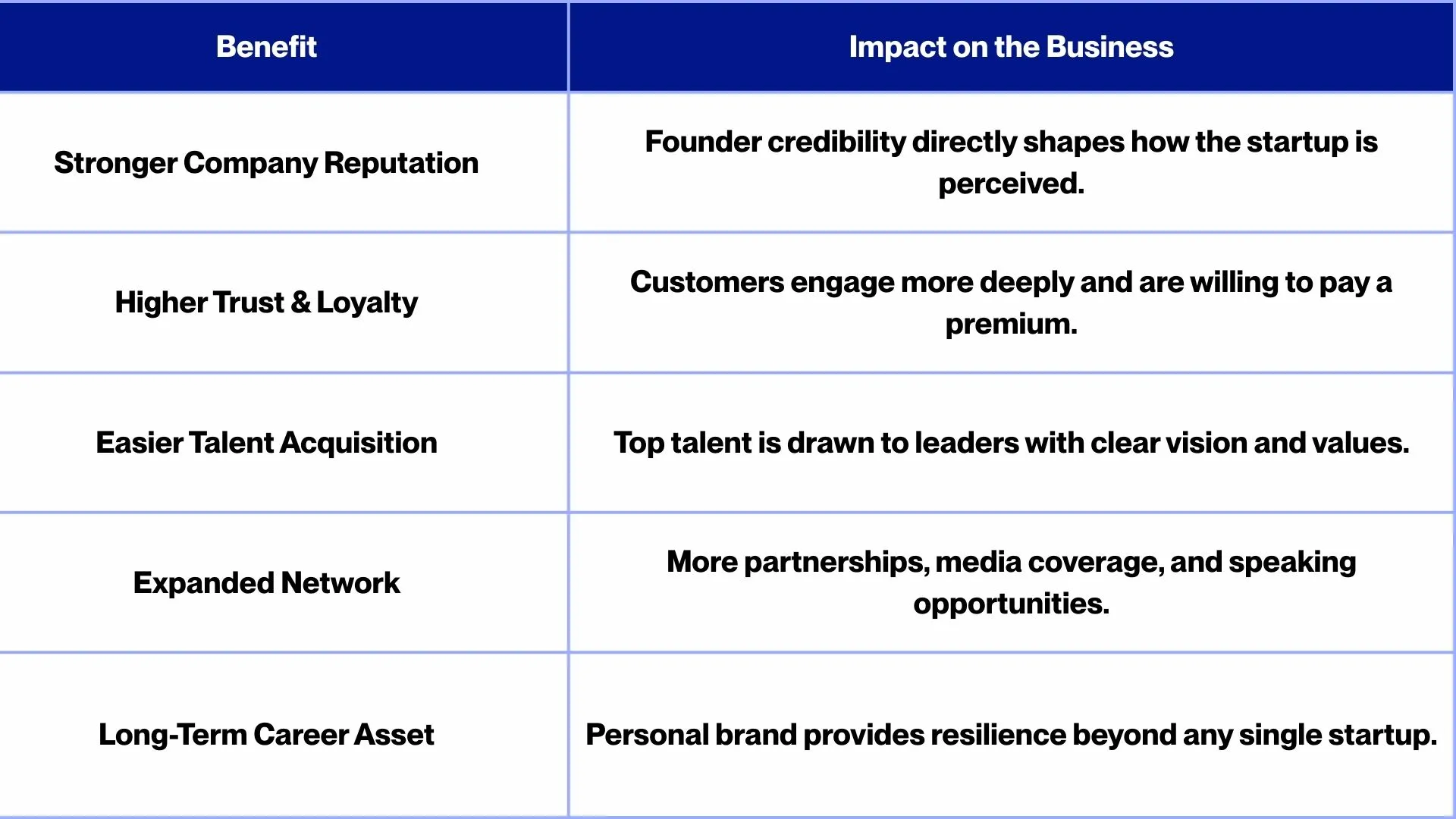
Stronger Company Reputation
Nearly half of your company’s reputation is tied to your personal brand as a founder. Your actions and image directly influence how your startup is perceived by the public and the industry at large.
Higher Trust and Loyalty
A majority of consumers are more willing to engage with a business led by a prominent, reputable leader. Many will even pay a premium for it. Your personal credibility transfers to your product, making people more comfortable becoming long-term customers.
Investor Magnet
The vast majority of investors say a well-branded founder is a key factor in their decision-making process. A visible thought leader gives venture capitalists and angel investors greater confidence in the future of the venture.
Easier Talent Acquisition
Founders with strong brands find it significantly easier to attract top talent and retain them over time. Your personal brand makes your startup an appealing place to work for skilled professionals who align with your vision and leadership style.
Expanded Network and Opportunities
A known personal brand leads to more partnerships, speaking invitations, and press coverage. Many brand evangelists feel a personal connection to the founder’s story, which fuels their loyalty and word-of-mouth advocacy. In short, your personal brand can turn into a growth engine for your network and business development.
Long-Term Career Asset
Companies may come and go, but your personal brand grows with each experience. It provides career resilience, ensuring that even if one startup does not succeed, you as a leader still carry goodwill, credibility, and connections into all future projects.
Crafting a Visionary Personal Brand as a Tech Founder
Building a personal brand means intentionally shaping the narrative about who you are and what you stand for. As a founder, you likely wear many hats, but your personal brand should tie together a cohesive story. Here is how to craft a strong, authentic brand foundation.
Define Your Core Story and Values
Start with self-reflection. Identify your core values, your mission, and the reason behind your work. Perhaps you are passionate about innovation in AI or you value inclusive leadership. Make that central to your narrative. People resonate with personal stories, such as the problems you set out to solve and the challenges you have overcome. Clarify two or three key themes that you want associated with your name. This clarity will anchor all your branding efforts.
Identify Your Target Audience
Just as you define a target market for your product, you must do so for your personal brand. For many tech founders, this includes investors, potential customers, industry peers, and prospective hires. Understanding your audience helps tailor your voice and content. If your startup is B2B enterprise software, your brand might aim to reach executives and engineers with thought leadership. Knowing your audience ensures your message resonates with the people you want to influence.
Craft a Consistent Message and Elevator Pitch
With your story and audience in mind, develop a clear personal value proposition. In one or two sentences, describe what you do and why it matters. Use a consistent tagline or theme across your bios, about pages, and introductions. Consistency is key because you want someone who finds you on LinkedIn to get the same core message as someone who hears you on a podcast. Reinforce your narrative by sharing content aligned with your expertise so people instantly associate you with those topics. Authenticity matters more than grandiosity. Set expectations you can meet and stay truthful to protect your credibility.
Embrace Authenticity and Vulnerability
One of the most powerful aspects of personal branding is the human element. Audiences can tell if a founder is being real or just staging a persona. Share not just polished successes but also the lessons learned from failures. Showing vulnerability can be a strength as it makes you relatable and trustworthy. Personal branding is about showcasing your best real self. Your unique perspective and personality are what make you stand out. Many famous founders are respected for their candid, down to earth communication. Authentic leaders inspire more loyalty than those who pretend to be infallible.
Align Your Personal Vision with Your Company Mission
As a tech founder, your personal brand and your startup brand will inevitably intertwine. Make sure your personal narrative complements your company story. If your startup is solving a climate change issue, let your personal passion for sustainability shine through. This alignment reinforces both brands and shows integrity. It means any publicity you get personally will cast a favorable light on your startup and vice versa. Finding the sweet spot where your persona amplifies the startup mission creates a compelling combined story.
How to Build Your Personal Brand Step-by-Step
Building a personal brand as a busy tech founder might feel daunting, but it becomes manageable when broken into clear steps. Here is a practical roadmap for 2026.
Optimize Your Online Profiles
Your LinkedIn profile, Twitter (X) bio, and personal website are often the first things people see. Make them count. Ensure your profiles clearly state who you are and what you do. Use a professional yet approachable profile photo and craft a headline that reflects your mission. For example, a bio might read: Founder and CEO of FinTech X, democratizing digital banking. Keep your handle consistent across platforms so you are easily discoverable. Consider owning a custom domain for your personal website to help control your Google search results. You want the first page of results for your name to reflect a compelling narrative of your career.
Choose the Right Platforms
You do not need to be everywhere, but you should show up where your target audience spends time. For most tech founders, LinkedIn is non-negotiable for professional thought leadership and investor visibility. Twitter (X) remains powerful for sharing real-time insights and engaging in tech circles. Depending on your brand, you might consider Substack for long-form writing or YouTube for technical explainers. Focus on one or two primary platforms at first rather than stretching yourself too thin. It is better to have a strong presence on a couple of channels than a weak presence on five.
Share Valuable Content Consistently
Content is the currency of personal branding. Start producing material that reflects your expertise and your journey. This could be LinkedIn posts sharing lessons learned while building your startup or a newsletter about personal branding trends. The key is to provide value by educating, inspiring, or offering a unique perspective. Share how you solved a tough technical problem or your take on where the industry is headed. Mix in personal anecdotes to keep it authentic, as people connect with struggles as much as wins. Use a consistent tone and stick to a regular schedule, as consistency builds trust over time.
Engage and Build Relationships
Personal branding is a conversation, not a broadcast. Engage actively with others by replying to comments, participating in industry discussions, and networking both online and offline. When you attend conferences, use those opportunities to reinforce your brand in person. Online, do not just post and disappear. Join discussions in your field and answer questions on platforms where your expertise can help others. Engagement builds trust and shows you are genuinely interested in a dialogue, which can eventually turn followers into collaborators or clients.
Leverage Thought Leadership Opportunities
As your presence grows, seek out larger platforms for your voice. This might involve writing guest articles for industry publications, appearing on podcasts, or speaking at webinars. These activities boost your credibility and expose you to new audiences. You can start small with a local startup meetup or a guest post on a niche blog. As you build a portfolio of content, you can pitch for larger opportunities like keynote panels. A strong personal brand often leads to inbound requests from reporters or invitations to join advisory boards.
Maintain Professional Consistency
Consistency across all channels is vital. Use the same name and profile photo so people recognize you instantly. Maintain a professional tone everywhere, as a single poorly considered comment can undermine the image you have built. Being professional does not mean being boring; you can still be witty and friendly as long as you stay on-brand. Set a realistic schedule for your content and stick to it so your audience knows what to expect. A cohesive brand builds trust on autopilot.
Examples of Founders with Powerful Personal Brands
Learning from real-world examples illustrates what a great personal brand looks like in action. Here are a few tech founders who have cultivated strong personal brands and the lessons we can learn from them, Personal Brand Strategy Examples:
Naval Ravikant: The Philosophical Tech Founder
Naval, the co-founder of AngelList, is renowned for his wisdom as much as his business success. He transformed himself into a thought leader by sharing insightful content about wealth, happiness, and innovation. Naval’s brand is approachable yet wise, often seen as a tech-age philosopher. Despite his success, his advice feels achievable and deeply human. He rarely promotes his company directly. Instead, he builds trust by sharing knowledge. When he starts a new initiative, he has a ready following eager to support him because of the credibility he has built.
Elon Musk: The Bold Visionary
Elon Musk has one of the most powerful personal brands on the planet. His brand is built on audacious visions like making humans multi-planetary and revolutionizing energy. He communicates in an unfiltered manner, which has attracted a massive fan base and provided billions in free marketing for his ventures. However, he also exemplifies the risks of a strong personal brand. His unfiltered comments have occasionally caused financial fallout or alienated audiences. The lesson here is that boldness can amplify your brand dramatically, but it must be managed with an awareness of the responsibility that comes with high visibility.
Kunal Shah: The Insightful Social Media Maven
Kunal Shah, founder of FreeCharge and CRED, built a personal brand by regularly sharing sharp insights on business and economics. He rarely talks directly about his products. Instead, he poses thought-provoking questions that often go viral in the startup community. This positions him as a visionary thinker and earns him the respect of peers and investors. His approach shows that high-quality content and humble interaction can turn a founder into a go-to authority, even while their company is still growing.
Melanie Perkins: The Mission-Driven Storyteller
Melanie Perkins, co-founder of Canva, leads with a brand focused on mission and empowerment. She frequently shares the story of building Canva from a simple idea to a global phenomenon, emphasizing the goal of democratizing design. Her persona is approachable and humble, focusing on the team and the users rather than herself. By aligning her personal narrative with her company’s mission, she has become a credible and loved figure within the creator community.
Your Personal Brand Success
You do not have to be the CEO of a billion-dollar company to have an influential personal brand. Many emerging tech founders build followings by focusing on niche expertise. A machine learning engineer who blogs tutorials or a founder who shares behind-the-scenes updates can become a go-to person in their specific field. The common thread is authentic expertise shared consistently. As long as you provide value and stay true to yourself, your personal brand can grow and yield significant results.
Personal Branding for Technology Professionals
Personal branding is not just for founders or CEOs. If you are a technology professional—such as a software engineer, product manager, data scientist, or consultant—building your brand can significantly boost your career. In a competitive field, your reputation and expertise set you apart. As a technology professional, your brand helps you establish authority and can lead to better job offers, promotions, or the chance to launch your own venture.
How can tech professionals cultivate a brand? Much of the advice for founders applies, with a few specific adjustments.
Showcase Your Expertise
If you are a developer, for example, you might answer questions on Stack Overflow, contribute to open source projects on GitHub, or write tutorials about technologies you specialize in. This establishes you as a knowledgeable authority. A strong GitHub presence or a well-read technical blog becomes a central part of your professional identity.
Network in Your Niche
Engage with communities relevant to your role, such as design forums, data science groups, or security circles on social media. By sharing insights and helping others, you build a reputation among your peers. This networking often leads to job referrals or collaborative projects. Who you know, and who knows you, matters deeply for career growth.
Personal Branding within Your Company
Even if you are not a public figure, you can develop a strong personal brand inside your current organization. Be vocal about your projects, volunteer to lead internal technical talks, and become the go-to person for specific knowledge. This internal visibility can fast-track you to leadership roles because colleagues and managers will recognize your unique value.
Stay Professional and Visible Online
Prospective employers or clients will likely search for you online before working with you. Having a polished LinkedIn profile, a personal portfolio site, or a collection of articles on Medium can be very impressive. Be mindful of your public social media content. You do not need to be an influencer; even a modest but well-crafted online presence speaks volumes about your professionalism and thought process.
Leverage Branding for Career Transitions
If you aspire to become a founder or a leader someday, starting your personal brand now will pave the way. Many tech professionals build an audience by sharing knowledge and then later leverage that following when launching a startup. Your personal brand is career capital. You accumulate it over time and can use it to unlock new opportunities whenever you are ready.
Overcoming Challenges and Staying Authentic
Building a personal brand is not without challenges. You might worry it feels forced, you might be introverted, or you might simply be strapped for time. Here is how to overcome common hurdles while keeping your brand authentic.
Time Constraints
Consistency is key, but finding time to post regularly is difficult. The trick is to make it manageable. Repurpose what you are already doing. If you write an email to your team with insightful observations, tweak it and post it on LinkedIn. Schedule a small amount of time each week for branding activities; it is as important as any other business task. If long articles are too time-consuming, focus on short-form content like quick updates or micro-blogs. While you can get support from agencies or assistants to help manage your presence, you must keep your own voice in the content. You cannot delegate your brand entirely or it will ring hollow.
Fear of Self-Promotion or Criticism
Some find the idea of personal branding uncomfortable. To overcome this, reframe personal branding as storytelling and sharing rather than boasting. You are contributing value to others by sharing knowledge. Every public figure faces criticism, so do not let that paralyze you. Focus on the positive connections you are making. You also do not have to share aspects of your life that make you uncomfortable. You can remain professional and authentic while keeping certain personal details private.
Maintaining Authenticity at Scale
As your audience grows, you might feel pressure to curate a specific image. Always return to your core values. The moment you start posting things just because they are trendy, pause. Authenticity is a long-term game. You might not please everyone, but the followers you do gain will be truly interested in the real you. If you make a mistake or share a prediction that does not pan out, be transparent. Authentic brands can evolve openly, and this honesty often strengthens your credibility.
Handling Public Missteps
Mistakes happen, whether it is an accidental comment or a public product failure. The best way to handle a crisis is to address it head-on. Own up to errors, apologize if needed, and communicate how you are addressing the issue. Because you are the brand, people will look to your response. A quick, thoughtful response can showcase your integrity and turn a situation around. Silence or defensiveness can damage trust rapidly, while accountability often leads to public forgiveness.
Conclusion: Be the Visionary of Your Own Story
In the tech world, innovation is not limited to code or product design. It extends to how you innovate yourself as a brand. Personal branding for tech founders and professionals is about positioning yourself as a leader for the future. It is about sharing your knowledge and mission so compellingly that your reputation opens doors long before you step through them.
This is not an overnight process. It takes consistent effort and a willingness to put yourself out there. However, the rewards are tremendous. A founder’s personal brand can be a decisive factor in a startup’s trajectory, and a professional’s brand can accelerate a career.
You already have the tools to build this asset: your experiences, your ideas, and your unique perspective. Start with a clear story, be authentic, and commit to engaging with your community. Over time, you will cultivate an influential presence that amplifies everything you do.
In a world where people buy into the leader as much as the product, crafting your personal brand is one of the best investments you can make. Take charge of your narrative and be the visionary voice in your corner of the tech universe. Your name and your story belong to you. Own them and let them shine. Contact OhhMyBrand today to learn more about how to transform your name into a brand that opens doors. Let’s work together to make you not only visible but unforgettable in your field.



.svg)
.svg)
.svg)
.svg)



.svg)