


Personal Branding
What Is Personal Branding For Dummies? Why Does It Matters?
Personal branding might sound like a buzzword, but today it is a must-have skill for career and business success. The concept isn’t actually new. Management guru Tom Peters famously coined the term “The Brand Called You” back in 1997. However, the importance of personal branding has skyrocketed in the social media age with platforms like LinkedIn, Twitter, and TikTok.
In fact, Google searches for personal brands have jumped over four times in the past decade. Why the surge? Simply put, people trust people. Studies show 92 percent of individuals trust recommendations from other people, even strangers, over those from brands. In a world where employers, clients, and partners often meet you online before ever shaking your hand, your personal brand can make or break that first impression.
If you’re a complete beginner in personal branding, do not worry. This guide will walk you through what personal branding really means, the key elements and principles behind it, and a step-by-step approach to build your own standout brand. It is like branding for dummies, but the product we are branding is you.
What Is Personal Branding?
Personal branding is essentially how you market yourself. One expert defines it as a marketing strategy focused on your most important product: you. It involves figuring out who you are, who you want to serve, and how you differ from others in your field. In plain terms, it is the practice of shaping the public’s perception of you. This includes your reputation, values, abilities, and personality in a way that helps you achieve your goals.
You are the brand. Just like companies brand their products, you are self branding through your career, your image, and your story. It is about showcasing the value you offer. It is also intentional reputation building. We all already have a reputation. Personal branding means actively managing and influencing that reputation rather than leaving it to chance.
Authenticity is critical. Successful personal brands are honest and genuine because you cannot fake your way to a great personal brand. In fact, the whole point is to highlight your real strengths and values. If you try to be someone you are not, people will notice. Furthermore, personal brands thrive on consistency and focus. You present a clear, consistent image and message about who you are. Over time, this consistent impression makes you memorable and trustworthy.
Think of personal branding as telling the story of You, Inc. in a compelling way. It is about defining what makes you unique and communicating that to a target audience. For example, personal branding typically involves understanding your skills, values, passions, and unique niche, then crafting a message that highlights these to the people you want to reach. The end result is a professional image that aligns with your true self and resonates with others. When done right, a personal brand helps you stand out from the crowd and opens doors whether you are angling for a dream job, attracting clients, or growing your network.
Why Personal Branding Matters
You might be thinking that this sounds like a lot of effort and questioning if personal branding is really that important. The answer is absolutely. In 2026 and beyond, your personal brand can directly impact your career opportunities and business success. Consider these eye-opening facts regarding hiring, trust, and leadership.
Hiring and Career
Roughly 70 percent of employers say a candidate’s personal brand is more important than their résumé. In other words, what shows up when someone Googles you or checks your LinkedIn can carry more weight than the credentials on your CV. Likewise, 44 percent of employers have hired someone because of their personal brand, and 54 percent have rejected candidates due to a poor online presence. If you’re job hunting or aiming for a promotion, a strong online profile and reputation are essential. In fact, nearly half of employers won’t even interview you if they can’t find you online.
Trust and Credibility
Building trust is huge whether you’re selling a product, a service, or just your own skills. As mentioned, people tend to trust individuals over faceless companies. In fact, 74 percent of Americans are more likely to trust someone with an established personal brand. When you cultivate a positive personal brand, for example, by sharing expertise or success stories, you become a familiar and credible figure to others. Colleagues, clients, and industry peers will more readily listen to your ideas, hire you, or refer opportunities to you if they perceive you as a trusted authority.
Business and Leadership
Personal branding isn’t just for job seekers or influencers. It’s incredibly important for entrepreneurs and executives too. A strong founder or CEO brand can increase trust in a company. One survey found 82 percent of people are more likely to trust a company whose senior leaders have an active social media presence. Leaders with well-crafted personal brands can attract more customers, partners, and even talent. Employees are often more engaged when their leadership is visible and authentic online. For small business owners, you are often the face of your business, and your personal reputation directly affects whether people want to do business with you. Thought Leadership Strengthens Personal Brand!
Opportunities and Network
A visible personal brand essentially acts as a magnet for opportunities. It can lead to job offers, client inquiries, speaking gigs, media interviews, and book deals. It also helps you build a network because people in your industry will recognize your name and want to connect. For instance, professionals with a strong online presence on LinkedIn often find they get unsolicited opportunities because they’ve positioned themselves as experts. LinkedIn profiles that are fully filled out are 40 times more likely to receive opportunities via the platform.
In short, personal branding matters now more than ever. We live in an age where your online presence is your new business card and possibly your competitive edge. By shaping your personal brand, you’re taking control of your narrative and how others perceive you. That can pay off in tangible ways, from career advancement to increased sales. People who actively manage and communicate their personal brand feel more empowered and are seen as more employable and more valuable in general. Investing some time in your personal brand is an investment in your future success.
Key Elements of Personal Branding
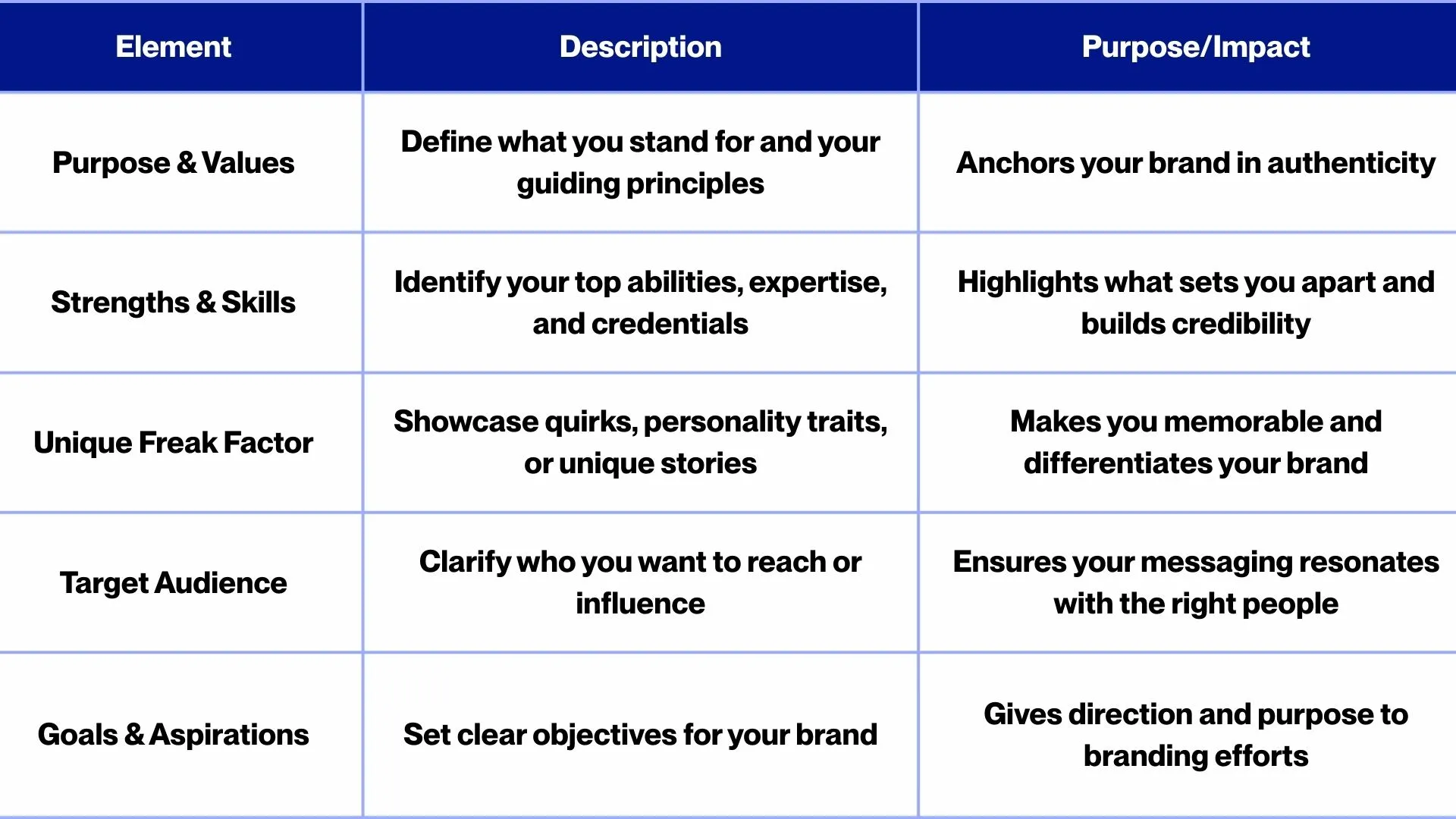
So, what goes into creating a personal brand? Let’s break down some of the key elements you’ll need to define and develop. Think of these as the building blocks or core components of your personal brand.
Purpose and Values
Start with who you are at the core. What do you stand for? What values guide you? What are you most passionate about? Your personal brand should reflect your authentic values and passions because that’s what gives it substance. For example, if you deeply value innovation and creativity, those should shine through in how you present yourself. Identifying these core values will anchor your brand in authenticity.
Strengths and Skills
Next, pinpoint your strengths, skills, and expertise. What are you really good at? What knowledge or abilities set you apart? These are the qualities you want to be known for. Maybe you’re a brilliant coder, a savvy marketer, or a great public speaker. Whatever it is, your brand should highlight your top strengths. Don’t forget to include factual credentials too, such as education, certifications, and notable experiences, as they add credibility.
Unique Freak Factor
This fun term from personal branding experts refers to the unique quirks or qualities that make you different. Embrace what makes you stand out. It could be an unusual combination of skills, a personal story, a personality trait, or even a signature style. Lean into your secret sauce. Your personal brand should showcase what is unique about you that others might remember. Your freak factor is that special something that is unusual about you, and it can actually become a branding asset.
Target Audience
A brand isn’t much use if it doesn’t connect with the right people. So, clarify who you want to reach or influence. Are you trying to impress potential employers in a certain industry, attract clients, or build credibility with peers? Defining your target audience will help you tailor your message. Your tone, content, and platforms might differ if you’re targeting corporate recruiters versus small business owners. Knowing your audience ensures your brand speaks directly to their needs and interests.
Goals and Aspirations
Be clear on what you want to achieve with your personal brand. Are you aiming to land a job at a top firm, become a thought leader in your niche, or launch a company? Your goals will shape your branding strategy. For instance, if your goal is to become a keynote speaker, you might focus on building a speaking reel and LinkedIn presence. If it is to get freelance clients, you might emphasize your portfolio and testimonials. Setting specific goals will give your brand-building efforts direction and purpose.
Personal Brand Statement
Once you understand your values, strengths, uniqueness, audience, and goals, you can distill them into a personal brand statement. This is essentially a concise tagline or summary of who you are and what you offer. This is your unique value proposition in a nutshell. For example, you might come up with a one-liner like: I am a data-driven marketer who helps tech startups grow through savvy SEO and brand storytelling. A good personal brand statement conveys your essence and promise of value to your target audience. Crafting this statement forces you to clarify your niche and how you want to be perceived.
Visual and Verbal Identity
Just as companies have logos and slogans, you should have a consistent look and voice. Consider the visual elements that will be part of your brand, such as professional headshots, profile photos, or a personal color scheme. Similarly, think about your communication style. Are you formal and authoritative, or casual and witty? Developing a consistent personal style, both visual and verbal, helps people instantly recognize you across platforms. For example, using the same profile photo across all social media and a cohesive bio description will make your presence more unified. The idea is to make sure everything about you looks and feels like the same person and aligns with the message you want to send.
Psychology Behind Effective Personal Branding: Principles of Personal Branding
Now that you know the elements you will be working with, let’s talk about some fundamental principles to guide how you build and maintain your personal brand. Think of these as the rules of the road for branding yourself effectively.
Be Authentic
Authenticity is the golden rule of personal branding. Stay true to yourself because your brand must be an honest reflection of who you really are. People can sense inauthenticity a mile away. Build your brand around your genuine personality, values, and voice, rather than trying to imitate someone else or create a false persona. Being authentic means knowing who you are, what you value, and who you are looking to help. When your personal brand is rooted in your real identity, it is more believable and enduring. Plus, it is a lot easier to maintain because you do not have to constantly put on an act. Honesty and integrity build trust, and trust is priceless for a personal brand.
Be Consistent
Consistency builds recognition. Just as big brands succeed by being consistent in their messaging and customer experience, your personal brand needs to show up consistently across the board. Use the same name, visuals, and tone on all your profiles or materials. Post regularly if you are on social media or blogging and do not disappear for months then suddenly resurface.
Over time, consistency in your message and presence will make people feel like they know you. Consistency also means aligning your actions with your brand values. If you tout yourself as a customer service guru, for example, consistently demonstrate helpfulness in your interactions. Inconsistency can confuse or turn off your audience, so aim to be reliable and steady in what you communicate.
Have Clarity and Focus
A strong personal brand is focused and clear about what it represents. Do not try to be everything to everyone. Especially as you start out, it is better to narrow your focus to a specific area of expertise or a set of themes you consistently talk about. Think of it this way: if someone sees your name, what is the first thing you want them to think of?
Define that niche for yourself. Clarity also applies to how you communicate. Make sure your online bio, resume, and posts all reinforce the same idea of who you are and what you do. This focused clarity will make your brand memorable and help you stand out as the go-to person for a specific topic.
Provide Value
Always remember that personal branding is not just about you; it is about what you offer to others. A common mistake is to make it overly self-centered through constant self-promotion. Flip that perspective and focus on your audience’s needs and how you can serve them. Share content and insights that help people, inspire them, or solve their problems. When you consistently provide genuine value, you build goodwill and credibility. In practice, this could mean writing useful how-to articles, giving industry tips, or offering advice. By being generous with your knowledge and time, you position yourself as someone people want to follow and engage with.
Be Intentional and Strategic
Treat your personal brand as a serious asset and manage it strategically. Set clear objectives, such as establishing yourself as an expert in a specific field or using your brand to transition to a new industry. Having goals lets you plan your content and networking efforts to support those goals. Be intentional about where you build your brand by choosing platforms that your target audience uses. This does not mean you can never post personal content, but it means you are mindful that everything you put out there contributes to an overall picture. Shape your narrative proactively so that over time you are building toward the reputation you want.
Patience and Persistence
Building a personal brand takes time. It is a marathon, not a sprint. Do not be discouraged if you do not see results in a week or a month. The key is to persistently put in the effort by creating value, engaging with others, and refining your approach. Over time, those small efforts compound. Many people with respected personal brands spent years building up their presence. They stayed patient and consistent even when the audience was small. If you stay committed, your influence will grow. Pay attention to feedback and refine your strategy as you go. Patience combined with continuous improvement will eventually lead to a strong brand.
Core Elements of Personal Branding Success
We’ve covered the foundational pieces and the guiding principles. Before jumping into the steps of building a brand, let’s look at a high-level view that many experts use. Success often comes down to three core elements: Performance, Image, and Exposure. Balancing these three will supercharge your personal brand.
Performance
This is what you deliver through your actual work, results, and contributions. At the end of the day, no amount of slick self-promotion can cover for lackluster performance. Your personal brand will shine if you are great at what you do. That means continually developing your skills, achieving results, and following through on your promises. If you are known as someone who delivers excellence, that becomes the bedrock of your brand. Performance is your substance and credibility; it proves you can walk the talk. Always work on your craft and build a track record that you would be proud to have associated with your name.
Image
This is how you present yourself. It encompasses your appearance, your branding materials, and the persona you project. Having a professional, consistent look from your headshot to your personal website design helps create a memorable image. However, image also includes your demeanor and communication. Are you upbeat and positive or thoughtful and analytical? Your image should align with your authentic self and resonate with your target audience.
For example, if you aim to be a trusted financial advisor, you want your image to exude reliability. If you are a creative designer, your image might be more artsy. Curate your image intentionally because everything from the tone of your social media posts to how you dress at events contributes to the overall picture.
Exposure
This refers to your visibility and presence in front of the right people. You might be performing well and have a great image, but if no one knows about you, opportunities will be limited. Exposure is all about getting your name and work out there. That could mean being active on platforms like LinkedIn or industry forums, networking both online and offline, speaking at events, or writing articles.
It also means engaging with others by commenting on posts and collaborating on projects. The goal is to ensure that people in your field see you and hear what you have to say. Remember that exposure should be strategic. It is not about being famous to random people, but about being known and respected by the community that matters for your objectives.
All three elements work together. If you have great performance but a poor image, you might be a best-kept secret. If you have exposure but poor performance, you might get attention but fail to impress when it counts. If you have a great image but no exposure, you have a solid story but no audience to hear it. Aim to strengthen all three: do great work, present yourself well, and get yourself out there. This trio is a handy reminder of where to focus your energy as you build your brand.
Personal Branding for Dummies: Step-by-Step Guide to Building Your Brand
Now for the practical part. How do you actually build your personal brand from scratch? It can feel overwhelming, but by breaking it into steps, anyone can start crafting a solid personal brand. Consider this your beginner-friendly roadmap.
Self-Discovery: Know Yourself
Every great brand starts with a clear identity, so begin by clarifying who you are. Take time for self-reflection. Identify your values, passions, strengths, and personality traits. What are you truly passionate about? What skills or knowledge do people come to you for? What are your proudest accomplishments? Also, pinpoint areas that make you unique.
Remember that freak factor we mentioned, the unique quirks that set you apart. Jot these down. This exercise provides the raw material for your brand. For example, you might realize you are a marketing strategist who values sustainability and has a quirky love for public speaking. All of that is fodder for your brand story. If needed, ask friends or colleagues for feedback about what they see as your strengths. The goal here is to define your core values, strengths, and uniqueness, which you will soon package into your outward brand.
Define Your Target Audience and Goals
Next, get clear on whom you want to influence or attract and what you want to achieve. Your target audience could be hiring managers in a certain industry, potential clients, or colleagues in your profession. Knowing your audience will guide where and how you brand yourself. For instance, if you are targeting tech recruiters, LinkedIn might be your primary platform. If you are targeting consumers for a coaching business, Instagram or YouTube might be better. Equally important, set specific goals for your personal branding. Do you want a job at a top firm, five new clients, or a chance to speak at a conference? Having concrete goals helps you tailor your message and measure success. Write down one or two big objectives to keep your efforts focused and purposeful.
Craft Your Personal Brand Message
Now it is time to articulate your brand message. This is where you combine what you offer with who it is for. Start by writing a personal brand statement or elevator pitch. It should answer who you are, what you do, and what value you provide to your audience. Keep it short and clear. For example: I am a CPA who helps small businesses save money by leveraging tech-driven accounting solutions. Do not worry about making it perfect on the first try. The key is that it captures your unique selling proposition. Once you have this core statement, you can expand it into a fuller bio for LinkedIn or your website. Make sure your message highlights your strengths and speaks to the needs of your target audience.
Establish Your Online Presence
In today’s digital world, an online presence is non-negotiable. Think of your online profiles as the storefront of your brand. Start with a comprehensive LinkedIn profile. Use a good-quality profile photo, write a headline that reflects your brand message, and fill the about section with your story and achievements. If relevant to your field, set up a simple personal website or online portfolio. This adds credibility and gives you a hub to direct people to.
Depending on where your audience hangs out, secure accounts on other platforms like Twitter, Instagram, or TikTok. You do not have to be everywhere; it is better to pick a couple of platforms and do them well. Make sure all your online profiles tell a cohesive story by using the same profile photo and a similar bio. Clean up any old content that might conflict with your desired professional image.
Create Content and Share Your Story
Finally, put yourself out there by creating content and engaging with your community. Content is how you demonstrate your expertise and personality in action. If you like writing, start publishing articles or blog posts about topics in your domain. If you are more verbal or visual, try making short videos or a podcast. Share content regularly that aligns with your personal brand themes, such as industry tips, project showcases, or personal anecdotes that have a professional lesson.
Be a storyteller. People remember stories, and they humanize you beyond a resume. Also, remember to engage with others. Social media is a two-way street, so respond to comments and participate in discussions. The key is to deliver value consistently. If you keep showing up with useful content, you will earn a reputation as someone worth paying attention to.
Network and Build Relationships
Personal branding is not done in isolation. It is also about who you know and who knows you. Actively work on expanding and nurturing your professional network because each connection can amplify your personal brand.
Connect With Relevant People
On LinkedIn, connect with colleagues, alumni, industry peers, recruiters, and thought leaders. When you meet someone at an event or online, send a follow-up connection request. Do not just collect contacts. Aim to connect with people who are relevant to your goals or who inspire you.
Engage One on One
Networking is about building genuine relationships. Comment thoughtfully on the posts of people you admire and congratulate connections on their achievements. Send the occasional message to check in or share something they might find interesting without being spammy. Over time, these small interactions build rapport.
Join Communities
Be active in industry groups, whether they are on LinkedIn, Slack, or other professional forums. These are great places to both learn and get noticed. By asking questions, sharing your knowledge, or helping others in these communities, you organically boost your personal brand as a knowledgeable and helpful person.
Attend Events
Sign up for webinars, conferences, workshops, or local meetups in your field. When you attend, do not be a wallflower. Introduce yourself to people, ask about their work, and share what you do. Your personal brand statement comes in handy here. Even making a few good connections at an event can be very valuable.
Collaborate and Mentor
Find opportunities to work with others in your niche. This could mean co-hosting a webinar, writing a guest blog post, or teaming up on a small project. Collaboration exposes you to new audiences and lends mutual credibility. Additionally, seeking mentors or mentoring others can establish you as a leader. Teaching and helping others is a great way to reinforce your brand expertise.
Networking is a vital part of branding because your reputation grows through people’s experiences with you. Every professional interaction is a chance to strengthen your personal brand. Be consistently professional, positive, and yourself. Over time, a strong network will become a powerful amplifier for your brand, referring opportunities your way and endorsing your abilities.
Monitor, Refine, and Keep Evolving
Lastly, remember that personal branding is an ongoing process. Your brand will evolve as you grow in your career and as the market changes. Make it a habit to monitor your brand’s presence and refine your approach as needed.
Google Yourself Periodically
See what comes up on the first page. Is it what you want people to see? If not, work on creating content that will push up the desirable results, like your personal website or LinkedIn profile, and push down any irrelevant or negative results.
Ask for Feedback
Once you have been branding yourself for a while, ask a few trusted contacts or new acquaintances what three words they would use to describe you based on what they have seen. See if it matches your intended brand. If not, you might need to adjust your messaging or your activities.
Stay Updated and Pivot if Needed
Continue learning in your field so that your brand remains current and authoritative. Evaluate new platforms or trends to see if they make sense for you. Do not be afraid to pivot your personal brand focus if your goals change. If you discover a passion for a new topic, it is okay to gradually shift. Just do it intentionally by introducing the new theme into your content so you bring your audience along with you.
Celebrate and Leverage Wins
When your personal brand efforts pay off, such as getting a job offer or hitting a milestone, celebrate it. Share the news humbly and thank those who helped you. Success breeds success. Showcasing achievements that align with your brand reinforces the perception that you are the real deal.
Keep in mind that building a brand is a journey. You might start today with just a rough LinkedIn profile and a couple of ideas, and that is fine. Keep chipping away at it. Over months and years, you will be amazed at the opportunities and connections that start to flow from the seeds you plant now.
Who Needs Personal Branding?
By now, you might wonder if personal branding is only for a certain type of person. Actually, personal branding is beneficial for almost everyone. Whether you are a fresh graduate or a Fortune 500 CEO, building an authentic reputation can open doors. Here are some examples of who really gains from personal branding.
Job Seekers and Professionals
If you are looking for a job or aiming to climb the career ladder, a personal brand helps you stand out. Instead of just being a name on a résumé, you become a known quantity. Hiring managers are more likely to reach out if they have seen your insightful LinkedIn posts or a personal blog demonstrating your knowledge. Even within a company, having a reputation as the go-to person in your area can lead to promotions or leadership opportunities.
Entrepreneurs and Business Owners
For anyone building a business, you are inseparable from your company’s brand, especially in the early stages. A founder with a strong personal brand can attract investors, customers, and partners more easily. People often bet on the person behind the company as much as the company itself. If you are an entrepreneur, establishing yourself as a credible, passionate leader in your space can directly boost your business. Customers love buying from people they trust and relate to.
Freelancers and Consultants
In fields like consulting, design, writing, coaching, and real estate, you are the product. Your personal brand heavily influences whether clients choose to work with you. A consultant who positions herself as a thought leader with a strong portfolio and testimonials will attract far more clients and can command higher rates than one who remains unknown. Freelancers who network and share their work online often have an easier time finding gigs because they have built credibility.
Executives and Leaders
High-level executives, such as CEOs or those vying for board positions, increasingly need personal branding. Today, a company’s leadership brand affects the company’s reputation. Leaders who are active and respected publicly can enhance their company’s image. Studies show consumers trust companies more when their leaders are transparent and accessible on social platforms. Furthermore, a strong profile can lead to speaking opportunities, press coverage, and future career offers.
Creators and Influencers
This one is obvious. If you are a content creator, artist, or aspiring influencer, you depend on your personal brand. Your brand is what attracts your audience or fans. Authenticity and a unique voice are especially important here, as is consistent content creation. Whether you are a YouTuber, a blogger, or an Instagram influencer, cultivating a distinct personal brand is what differentiates you in a crowded digital landscape.
Anyone Who Wants to Control Their Narrative
Even if you are not actively job hunting or selling something, personal branding is about controlling your own narrative. Maybe you are a student or between careers. Building your brand now by starting a blog or sharing volunteer experiences can set you up for future success. If reputation matters in what you do, then personal branding matters too. You do not have to become a celebrity; you are simply making sure your talents and identity are known to those who should know about them.
Can Personal Branding for Dummies Work?
By now you understand the what, why, and how of personal branding. But maybe you’re still hesitant. You might be thinking that this sounds good in theory, but you wonder if a personal branding approach for a total beginner can really yield results. Will personal branding actually work if you are essentially a dummy at it?
The short answer is yes. If you put in the effort, personal branding absolutely works, even for newbies. Remember, every famous expert or influencer you see out there started from zero at some point. The difference is they consistently worked on building their profile. There is nothing magical separating you from them aside from know-how and persistence. Now you have the know-how, so it is really about taking action and sticking with it.
Small Steps Lead to Big Payoffs
Personal branding is cumulative. Your early actions might seem like they are not making a dent—a post here, a coffee chat there, but over time they compound. For example, you might start by writing on LinkedIn for an audience of ten, but a year later one of your posts could catch the eye of a recruiter or a big client. Consistency is key. It is like working out; one day at the gym does not show much, but months of routine exercise can transform you. Similarly, months of routine branding activity can significantly transform your career trajectory.
Real Examples Abound
Look around your industry or LinkedIn network. You likely know of people who do not have extraordinary skills but have really built a name for themselves just by putting themselves out there. Maybe they post weekly insights or they are active in professional groups. They are reaping opportunities because of visibility. There is no reason you cannot do the same. It is not reserved for geniuses or extroverts; it is for anyone willing to share and engage.
Trust and Credibility Build Over Time
As you consistently share value and show up authentically, people will start to pay attention. They will begin to associate your name with the topics or qualities you talk about. Research shows that audiences are more likely to trust and support individuals with a well-established personal brand. For instance, clients prefer to hire consultants who have a visible track record online. Employers are more impressed by candidates who demonstrate thought leadership or passion in their field outside of their 9 to 5. By simply being present and professional online, you are already ahead of many who are not.
Opportunities Will Knock
Once you have even a modest personal brand, do not be surprised if opportunities start coming to you out of the blue. Maybe a podcast invites you as a guest after seeing your blog, or a manager messages you about a job opening because they liked your posts. This actually happens a lot. Personal branding creates a pull effect. Instead of you always pushing and applying for things, sometimes things come to you. It is incredibly rewarding when that starts happening, and it can happen for you too.
You Do Not Have to Do It Alone
If you feel overwhelmed, remember you can seek help. There are communities of people working on personal branding you can join for support. You can also follow experts or even hire a coach if you have resources. Even something as simple as doing a personal brand challenge with a friend can make it more fun. The branding journey can actually be enjoyable because it is a form of self-development and creative expression. Approach it with a spirit of curiosity and growth rather than a chore.
Will everyone who tries personal branding become wildly successful? Perhaps not, but everyone can definitely improve their standing and open new doors. Proactively managing your personal brand will yield positive effects, even if they are incremental at first. It will work if you work on it. The more love and strategy you give your personal brand, the more it gives back.
Now, go ahead and take the first step. Google yourself, update that LinkedIn bio, or share a cool article with your thoughts. Do something to put this into practice. In a few months, you will be glad you started today. Your future self will thank you.. Contact OhhMyBrand today to learn more about how to transform your name into a brand that opens doors. Let’s work together to make you not only visible but unforgettable in your field.


.svg)
.svg)
.svg)
.svg)



.svg)