


Personal Branding For Founders
What Is Personal Branding Positioning Strategy For Founders, Solopreneurs, And Consultants?
In 2026, personal branding is a business imperative. Founders, solopreneurs, and consultants are discovering that a strong personal brand is survival gear in the modern market. In an age dominated by digital interactions and information overload, people invest in people rather than just products or services. Potential clients, customers, or investors will research you before your business, evaluating your online presence and reputation as a proxy for trust. Nearly half of a company’s reputation is directly tied to the reputation of its leader. If you are not actively shaping your personal brand, you risk invisibility or mistrust in the eyes of your target audience.
This guide explores why personal branding has become non-negotiable in 2026 and outlines strategies to position yourself as a leader in your field. We will look at unique considerations for different roles and how to build a memorable brand that attracts opportunities. By the end, you will understand how a personal branding positioning strategy can be your strongest competitive advantage and why ignoring it is a significant risk.

Why Personal Branding Matters More Than Ever in 2026
In the past, personal branding might have been considered optional. In 2026, it is mandatory for success. The rise of social media, remote work, and AI-generated content has changed how trust is built. Audiences today crave authentic human connection and verifiable credibility over polished corporate messaging. Personal branding has transformed from a career accessory into a strategic asset.
Trust and Credibility
Modern buyers, partners, and employers are skeptical of faceless brands. They want to know the person behind the business. Most consumers trust a company more when its senior executives are active and transparent on social media. People do not just ask if a product is good; they ask if they can trust the person behind the product. A strong personal brand answers that question by showcasing your values, expertise, and track record.
Visibility in a Crowded Market
We live in a world of information overload where countless businesses and professionals vie for attention. Personal branding is how you cut through the noise. If you do not build a personal brand in 2026, you may remain invisible. This is especially true for those operating in saturated spaces. Your personal brand positioning, which is how you differentiate yourself in the mind of your audience, can make the difference between being memorable or being just one of many. A distinctive personal brand helps you become the go-to name in your field.
Humanizing Your Business
A personal brand puts a face to a name. For founders and business owners, this human touch fosters trust in ways traditional marketing cannot. When you share your story and show up authentically, it humanizes the company. Audiences feel they know who they are buying from or partnering with. This connection is powerful because people often follow the person first and the company second. An insightful article or post can captivate an audience who then becomes curious about your company offerings. Your personal reputation becomes a trust shortcut for your business.
Competitive Edge in the Age of AI
The year 2026 finds us deep in the era of AI and automation. While AI can produce content and mimic human communication, it cannot replicate your unique personality, story, and perspective. The most AI-proof people are those with personal brands. Your authenticity, human stories, and emotional intelligence are not algorithmically generated. As routine content becomes commoditized by AI, audiences place a premium on the human part of your brand. Personal branding highlights those human qualities that no machine can copy.
Direct ROI and Business Outcomes
A well-positioned personal brand yields tangible benefits. A founder with a strong personal brand often closes deals faster, attracts more inbound leads, and can charge premium prices due to the credibility they have built. They tend to hire better talent and find it easier to form partnerships. In contrast, a founder with no personal brand must constantly work to convince others and relies heavily on paid marketing because trust is not established upfront.
Your personal reputation can make or break key business deals. Most decision-makers research founders online before investing. If you do not tell your story, someone else will. In 2026 and beyond, silence is a risk. An absence of a personal brand does not mean people will not form an opinion; it just means you will not be guiding it.
Personal Branding for Founders and CEOs in 2026: The New Growth Engine
Personal Branding for C-Level Executives: For company founders and CEOs, a personal brand is no longer a vanity project. It is tightly woven into the success of the company. While brand discussions often focus on logos and products, the face and voice of a leader are essential components of a company brand in 2026. Research suggests that nearly half of a company’s market reputation is derived from perceptions of its leader. For modern executives, this means that personal identity and corporate success are inseparable.
Your Reputation is the Company Reputation
Customers, investors, and employees now scrutinize the CEO as much as the product. With professional networking sites and news articles readily available, the person behind the company is constantly under the spotlight. A credible and positive personal brand elevates the credibility of the company by association. Conversely, a negative image or a total lack of presence can diminish trust in the business. People follow leaders they trust rather than just corporate logos.
Founder Visibility Drives Trust and Sales
A visible and authentic founder serves as a magnet for business. Many consumers are more likely to purchase from a company whose CEO actively communicates their values and vision. By sharing industry insights and behind the scenes looks, you build a sense of familiarity. When prospects eventually encounter your product, they already feel a connection to the source. Buyers are far more likely to engage with a founder they feel they know, often trusting personal recommendations over corporate advertisements. A single social post from a founder can warm up an audience more effectively than traditional ad copy.
Investor and Talent Magnet
Personal branding significantly influences investor confidence during funding rounds. Investors frequently bet on the person leading the company as much as the business idea itself. If a search for your name reveals thought leadership articles and a strong professional presence, it signals that you are a knowledgeable and influential leader. This reassures stakeholders of your vision. Furthermore, top talent is drawn to leaders with inspiring personal brands. A compelling personal identity helps you attract the best employees and partners who are excited to join your specific mission.
Humanizing and Storytelling
Founder branding is about putting a human face on a corporate story. By sharing the passion and values that drive you, you make your brand relatable. Customers connect with a founder’s story because it taps into emotions in a way that technical specifications cannot. Sharing your journey and principles creates an emotional hook. In a crowded market, your personal story is your most unique differentiator because no competitor can replicate your specific life experience and perspective.
Founder Led Marketing Channels
In 2026, some of the highest impact marketing occurs on personal channels rather than corporate ones. A post from a founder often receives far more engagement than an official company press release. It is common for a CEO to have a larger following than the company itself. Cultivating your own audience can dramatically extend your company reach. This founder led distribution acts as a low cost marketing tool with a powerful trust factor built in.
Reputation Risk of Staying Invisible
Choosing to remain invisible can inadvertently create distrust. In 2026, finding no information about a founder may cause people to wonder if the leader is disengaged or out of touch. If you are not actively shaping your narrative, others may fill the void with their own assumptions. Being silent is no longer a safe strategy; it is a liability. A founder who communicates openly sets the narrative on their own terms.
Personal Branding for Solopreneurs: You Are the Brand
For independent entrepreneurs, freelancers, coaches, and owners of a company of one, personal branding is critical because you are the business. Unlike a larger corporation where a brand identity might cushion a founder from public view, a solopreneur’s personal and business brands are identical. Your name, face, and reputation carry the full weight of your enterprise. In 2026, this fusion of person and profession is your greatest asset.
Human First Marketing Wins
Authentic, human-centered marketing consistently outperforms polished but impersonal branding. This is an advantage for solopreneurs because you have the agility to be genuine without corporate constraints. Clients often prefer to hire an expert who shares helpful tips and a relatable story over a faceless entity with a generic logo. You should lean into this strength by being unapologetically yourself. Sharing insights in your own voice and showing your personality makes you memorable. In a world saturated with automation, audiences respond to real people who share lived experiences.
Differentiation in a Crowded Solo Market
The solopreneur economy has expanded significantly, meaning many professionals offer similar services. Your personal brand positioning is what sets you apart. Think of your brand as a unique signature. A specific combination of skills, values, and personality traits distinguishes you from others in your field. Narrow niches and clear points of view tend to win over broad approaches. Clarifying what you want to be known for and who you specifically serve helps ideal clients find you. Without a distinct brand, a service provider becomes a mere commodity.
Building Trust at Scale
Solopreneurs often lack sales teams or large advertising budgets, so online interactions must build trust automatically. Social media profiles, websites, and email communications should be treated as extensions of your brand. Every post or tutorial is an opportunity to demonstrate expertise and reliability. Consistency in both messaging and frequency is vital. If a prospect finds a rich backlog of useful content, they will perceive you as credible and established. Regularly auditing your online presence ensures that what a prospect sees aligns with the image you want to project.
Community and Networking
Solopreneurs have a unique ability to form tight-knit communities. Nurturing a focused network of engaged followers and peers is more valuable than chasing vanity metrics like high follower counts. Depth of influence matters more than breadth of reach. By consistently providing value in specialized forums or local meetups, you position yourself as a leader within that circle. You do not need everyone to know your name; you only need the right people to trust you.
Authenticity Over Perfection
Audiences are often fatigued by overly curated images and corporate speak. As a solopreneur, you have the freedom to be agile and honest. Imperfections and quirks can actually make your brand more endearing and relatable. Sharing your journey, including the work process and occasional struggles, builds a loyal following. Transparency helps you establish meaningful relationships that stand out in an era of AI generated content. Staying real and value driven allows your personal brand to flourish alongside your business.
Personal Branding for Consultants: Establishing Authority and Trust
Consultants, whether independent or leading a small firm, trade on their expertise and credibility. In this field, your personal brand is essentially your business card, sales pitch, and reputation rolled into one. Clients hire consultants they trust and respect. Building a personal brand positioning strategy in 2026 is about showcasing your authority in your niche while remaining relatable and trustworthy.
Thought Leadership as Lead Generation
Demonstrating your knowledge is half the battle in winning clients. A strong personal brand positions you as a thought leader in your domain, which directly leads to inquiries and opportunities. For example, a marketing consultant with a popular newsletter or insightful industry articles has already pre-sold their expertise to their readers. Content is the primary currency for consultants because it builds familiarity and credibility at scale. Each blog post, podcast appearance, or case study serves as a touchpoint that enhances your visibility.
Differentiating Your Niche and Value Proposition
The consulting market is crowded, making it essential to define a clear niche and unique value proposition. Rather than positioning yourself as a generic management consultant, you should be specific. You might be the specialist for digital transformation in mid-size healthcare companies or an expert in diversity strategies for tech startups. Specialization is the cornerstone of standing out. When you focus on a specific niche, you can tailor your message to the exact problems your audience faces. Your value proposition should clearly answer why a client should choose you over a competitor by highlighting unique methodologies or rare industry experience.
Showcasing Credibility Through Credentials and Case Studies
Trust is paramount in consulting. To build it, you must highlight concrete credibility markers like certifications and degrees, but always frame them in terms of value to the client. For instance, mentioning a certification is more effective when paired with the number of successful implementations you have led. Client success stories are equally powerful. Sharing testimonials that outline a challenge, your specific intervention, and the measurable results makes your value tangible. These narratives allow prospective clients to envision how you can solve their specific problems.
Maintaining a Professional Online Presence
Prospective clients will almost certainly research you online before reaching out. Your LinkedIn profile, personal website, and other platforms must consistently convey your brand. This includes professional headshots, a compelling bio, and consistent messaging regarding your specialties. It is important to be Google-worthy, meaning that a search of your name should yield a rich first impression of your activity and knowledge. If your website or professional profiles do not appear on the first page of search results, increasing your content output or participating in guest articles can help improve your visibility.
Authenticity and Client Relationships
While expertise is crucial, the human side of consulting is what often seals a deal. Clients choose consultants based on personal fit as much as skill. Your brand should give a sense of your style and values, whether you are a straight-talker or a data-driven strategist. Engaging with your audience by responding to comments and participating in discussions makes you approachable. Striking a balance between authority and approachability is the hallmark of a strong consultant brand.
For consultants in 2026, personal branding is about building a reputation as a trusted authority. By communicating unique value, demonstrating expertise through content, and maintaining an authentic connection with your audience, you position yourself to attract the right clients. Your personal brand creates confidence in your abilities before you even step into the room. Try Ohh My Brand, for Famous Personal Branding Consultant Services.
Crafting Your Personal Brand Positioning Strategy in 2026: A Step-by-Step Framework
Developing a personal branding strategy may sound abstract, but it can be approached systematically. Below is a personal brand strategy framework for 2026, tailored for founders, solopreneurs, and consultants alike. Follow these steps to build a compelling personal brand that is authentic and effective in achieving your goals.
1. Define Your Brand Foundations
Every strong brand starts with clarity about who you are and what you stand for. Begin by articulating your purpose: why do you do what you do? Write down one sentence that captures your mission as a guiding north star. This statement will inform all your future decisions and messaging.
Next, identify your core values. These are the principles you refuse to compromise on, such as innovation, integrity, or inclusivity. These values must shine through in your brand as they are a key part of your identity. Finally, crystalize your target audience. Be as specific as possible about who you are trying to influence. Understanding their specific needs and pain points allows you to tailor your tone and choose the right platforms for engagement. By solidifying your purpose, values, and audience, you set a strong foundation for everything else.
2. Carve Out Your Niche and Unique Value Proposition
With your foundations set, focus on positioning. How will you stand out so you do not blend in? Start by defining your niche. Specificity is a superpower in personal branding. Choose a technical or thematic domain to own so that you are recognizable for a particular expertise.
Next, craft your Unique Value Proposition. This is the promise of value that you deliver uniquely well. To find your value proposition, consider the intersection of your strengths, the needs of your audience, and what competitors are offering. Determine what you do better or differently than others, whether it is a rare combination of skills or a proprietary methodology. Keep this message concise and clear, as it will feed directly into your headlines and bios across all platforms.
3. Craft Your Brand Story and Messaging
Facts tell, but stories sell. It is time to weave your expertise into a compelling brand narrative. Your brand story is the human element that makes your expertise memorable. Share defining moments or epiphanies that shaped your path, such as why you started your company or a specific system you wanted to fix.
Alongside your story, hone your core messaging. This includes an elevator pitch and a few key taglines that summarize your mission. Ensure your messaging is consistent across LinkedIn, your website, and speaking introductions. Consistency builds recognition. Try writing a short bio that includes your role, who you help, how you help them, and a pinch of your personality to serve as a template for all your social media intros.
4. Build Your Online Presence and Content Strategy
In 2026, your digital presence is your storefront and resume combined. Ensure you have professional profiles on key platforms relevant to your field. If possible, a personal website or blog under your own domain is highly valuable as a hub for your content and credibility.
Develop a content strategy that aligns with your brand positioning. Content is how you demonstrate expertise and provide value at scale. Decide on formats that work for you, such as articles, short videos, or podcasts, and commit to a consistent frequency. Focus on being audience-centric by answering their questions and addressing their challenges. Teaching what you know is an excellent way to build authority without appearing like you are selling. Focus your energy on the platforms where your target audience hangs out, as depth of influence is more important than broad reach.
5. Engage, Network, and Build Relationships
Branding is a dialogue, not a one-way broadcast. In 2026, engagement is the primary currency of a personal brand. It is essential to prioritize interaction with your community by responding to comments, asking questions, and participating in industry discussions on platforms like LinkedIn, Reddit, or specialized Slack communities. Supporting the content of others is equally important; networking is a key part of building your brand because your associations influence how you are perceived.
Connecting with other respected voices in your industry can lead to collaborations such as guest blogging, co-hosting webinars, or interviewing one another. These activities expose your brand to new audiences and add credibility through association. Public speaking, whether at virtual webinars or in-person conferences, remains a powerful way to rapidly elevate your profile. The personal brands that win in 2026 are those that lead with trust and humanity. Depth of influence is the new reach; a smaller, truly engaged network is far more valuable than a large, indifferent following.
6. Leverage AI and Other Tools Intentionally
AI has become a standard part of the personal branding toolkit in 2026. When used correctly, generative AI can be a powerful accelerator for brainstorming content ideas, drafting posts, or refining your writing. The key is to use technology to enhance your voice rather than replace it. Think of AI as a smart assistant that helps structure and polish your original thoughts.
Relying too heavily on AI can cause your content to lose its personal touch, which erodes authenticity. Audiences can often sense generic, cookie-cutter output. The optimal approach is to use AI to make your brand clearer by helping you articulate the ideas you already have. You can also utilize analytics tools to monitor engagement and design tools to create supporting visuals. By working smarter with technology, you can maintain a strong presence without it consuming all your time, provided you keep the human element at the center of your strategy.
7. Audit, Iterate, and Evolve
Building a personal brand is an ongoing process rather than a one-time project. You should periodically audit your brand presence across all channels to ensure everything still aligns with your current goals. If your professional focus has shifted, your branding must evolve to reflect that change. Evaluate what content resonates with your audience and adjust your strategy based on those results.
Pay attention to feedback from clients and peers. If you are not receiving the opportunities you expected, analyze whether the issue lies in your messaging or your visibility. Do not be afraid to refine your niche as you gather more data. Personal branding is a practice that requires you to remain intentional. As you grow professionally, let your brand grow with you by sharing new lessons and expanding into new formats.
Brand Leadership Positioning in 2026: Becoming a Thought Leader
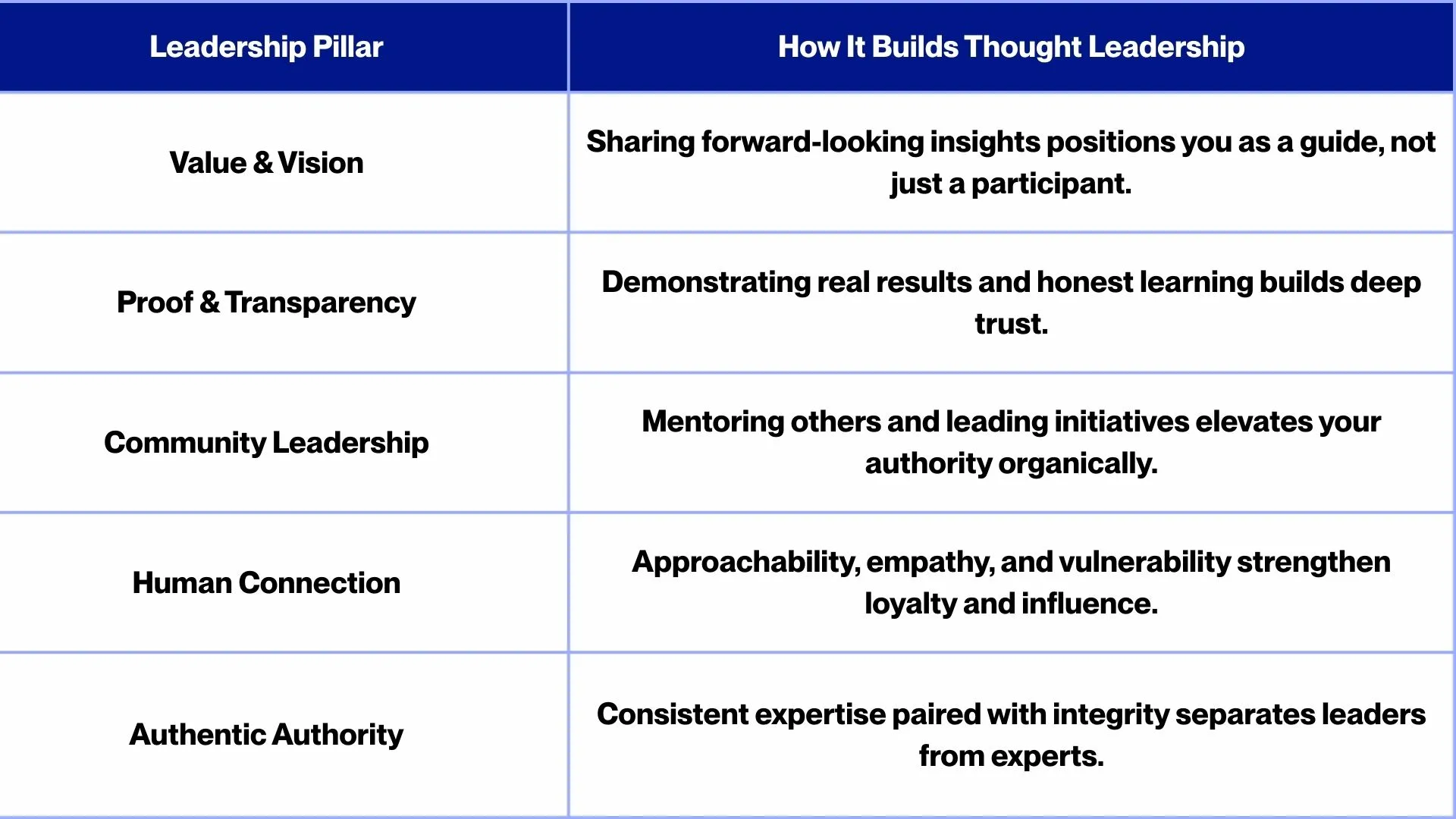
To truly reap the benefits of personal branding, aim beyond visibility and strive for leadership. Brand leadership positioning means establishing yourself as a top authority so that peers and target audiences look to you for insight. In 2026, achieving this status is deeply tied to authenticity, expertise, and trust.
Lead with Value and Vision
Thought leaders do more than comment on trends; they shape them. To position yourself as a leader, consistently offer valuable perspectives that help others navigate your field. This can include publishing whitepapers, researching blog series, or sharing videos that predict upcoming industry shifts. Having a clear, knowledge-backed point of view makes your voice distinct. Communicating a vision for the future signals that you are not just participating in your industry, but guiding it.
Build Trust Through Proof and Transparency
In the skeptical environment of 2026, thought leadership is proven by deeds. Audiences can quickly identify when someone is insincere. Bolster your positioning with demonstrable proof of expertise, such as sharing key outcomes, project data, and concrete examples. Transparency is equally vital. Admitting to a mistake or a learning curve increases trust by showing humility and continuous growth. Aligning your actions with your words cements your status as a genuine leader.
Community Leadership and Mentorship
True leaders create and nurture other leaders. Positioning yourself at the top involves bringing others up with you through formal or informal mentorship. Offering free webinars or Q&A sessions for newcomers solidifies your expertise and earns respect. Additionally, participating in or spearheading community initiatives, such as leading a professional association or hosting a virtual summit, puts you at the center of industry conversations. In 2026, those viewed as community leaders naturally become the most trusted thought leaders.
Stay Human as You Lead
A hallmark of modern brand leadership is maintaining approachability even as your stature grows. The era of the untouchable guru has passed. People want leaders who are relatable and honest about their experiences, including their fears or challenges. This vulnerability strengthens the emotional bond with an audience. Balance your confidence with empathy, and avoid appearing aloof. By acknowledging peers and elevating others' voices, you resonate more deeply with an audience that follows leaders they feel connected to.
Brand leadership positioning is about amplifying your brand to drive your industry forward. It is the difference between being just another expert and being a guide for your peers. By focusing on authenticity, proof of expertise, and genuine human connection, you establish a legacy that extends beyond immediate business goals.
Conclusion: Embrace the Journey
In 2026, personal branding is essential for reaching the next level of success. While platforms and technology like AI will continue to evolve, trust remains the primary currency of business. You build that trust by being authentically yourself.
Building a brand is a marathon, not a sprint. Minor steps, such as drafting a mission statement or updating a bio, compound over time into significant professional recognition. Stay tuned to your audience’s feedback and be willing to iterate. The most resilient brands are those that stay relevant by continuously learning.
Commit to your personal brand with the same vigor you commit to your business. Define your strategy, take action, and seek support when needed. Turning your personal identity into your greatest asset is the most effective way to position yourself for success in 2026 and beyond. Contact OhhMyBrand today to learn more about how to transform your name into a brand that opens doors. Let’s work together to make you not only visible but unforgettable in your field.


.svg)
.svg)
.svg)
.svg)



.svg)