


Personal Band vs. Personal Branding
What Is The Difference Between Personal Brand & Personal Branding?
Many people use the terms personal brand and personal branding interchangeably. You might even wonder if they are the same thing. In reality, these concepts are closely related but distinct. Your personal brand is essentially the reputation you have and how others perceive you while personal branding is the active process of shaping that reputation. Both play a crucial role in today’s professional and digital world where standing out and building trust can open new opportunities.
As Amazon founder, Jeff Bezos famously said, your personal brand is what people say about you when you’re not in the room. This quote highlights that everyone already has a personal brand in the eyes of others whether they realize it or not. The key is to understand these terms and leverage them to your advantage.

Your personal brand is a reflection of your authentic self and should evolve as you grow. In today’s competitive job market, establishing a strong personal brand is crucial for professional success because it helps set you apart and can open doors to new opportunities. However, personal branding is equally important in ensuring the world sees you as you want to be seen.
In this guide, we will break down the definitions of these terms and the difference between them. We will also provide tips on how you can actively build and manage your personal brand through effective strategies. By the end, you will understand why you need to focus on both your personal brand and personal branding to achieve long-term success.
What Is a Personal Brand? Why Is It Important?
If you have ever wondered what a personal brand is and why it is important, the answer starts with recognizing that a personal brand is essentially who you are in the eyes of others. Your personal brand encompasses the unique combination of your personality, values, skills, and reputation that people associate with you. In other words, your personal brand is how the world sees you. It is a widely recognized and largely uniform perception or impression of an individual based on their experience, expertise, competencies, actions, and achievements. In simple terms, this is your professional identity or reputation.
For example, think about what comes to mind when others hear your name. The qualities, accomplishments, and characteristics they immediately recall represent your personal brand.
Importantly, everyone has a personal brand whether you actively cultivate it or not. It could be positive, negative, or neutral, but there is a perception about you that exists. Realizing what your personal brand is and how people perceive you is critical because it affects your career and relationships. You have a personal brand whether you know it or not, so it is better to understand and shape it rather than leave it to chance.
Why Your Personal Brand Matters
A strong personal brand can be a powerful asset. In a crowded marketplace or workplace, your personal brand helps differentiate you from others with similar qualifications. It highlights what makes you unique and why someone should choose to work with you over someone else. In essence, a well-defined brand is your competitive edge.
Consistency in your actions and messaging builds a positive reputation. Over time, people come to trust you based on what your brand stands for. For example, if your personal brand is about being an expert problem solver, consistently delivering solutions will make others confident in your abilities. Trust is crucial for attracting clients, job offers, or leadership opportunities.
A strong personal brand makes you memorable and ensures you stay relevant. When opportunities arise, people will think of you if your brand is the one that comes to mind for a given expertise or quality. Being top of mind can lead to referrals, recommendations, and invitations that you might otherwise miss.
Beyond these points, your personal brand can influence how far you advance in your career. It serves as a special factor that can accelerate your professional growth. For instance, a reputable personal brand can lead to speaking engagements, media features, or partnerships because you are seen as not just another professional but a standout individual with something special to offer.
What Is Personal Branding and Why Is It Important?
While a personal brand is the identity and impression, personal branding is the process. Personal branding refers to the active shaping and promoting of your personal brand. It is the ongoing strategy and set of actions you use to influence how others perceive you. This is the conscious and intentional effort to create and influence public perception of an individual by positioning them as an authority in their industry, elevating their credibility, and differentiating themselves from the competition to ultimately advance their career and have a larger impact. In simpler words, personal branding is how you present yourself and market yourself to the world.
Personal branding is the intentional, strategic practice of defining and expressing your value. It involves everything from the way you curate your online presence, such as your LinkedIn profile and personal website, to how you network and communicate. Every professional bio you write and every interaction you have contributes to your personal branding. The goal is to ensure that the image you project aligns with your true self and the personal brand you want to establish. It is essentially personal marketing, which means aligning who you are with what you do and showcasing it purposefully to your audience.
Why Personal Branding Matters
Personal branding is crucial because even if you have a great identity, it will not truly shine unless you actively manage and communicate it. No matter how talented you are, if nobody knows about you, opportunities will be limited. Personal branding helps you stay visible in your industry or professional community. By regularly sharing your insights, achievements, and stories, you remain relevant and remind people of your expertise. In today’s digital age, consistent branding prevents you from being forgotten.
This process is also about engaging with others and building relationships. By showcasing your authentic self and values, you attract like-minded people and supporters. This enables you to create meaningful professional connections and a community around you. Such relationships support your growth through mentors who notice you, clients who trust you, or peers who collaborate with you.
Through deliberate personal branding, you can position yourself as a go-to authority or specialist in your field. If you consistently publish content about a niche topic, you eventually become associated with that expertise. This positioning can lead to career advancement as you are more likely to be tapped for high-profile projects or job roles where that expert reputation adds value. It essentially lets you guide your career trajectory rather than leaving it to chance.
Another compelling reason personal branding matters today more than ever is the transparency of the internet. Recruiters and employers now routinely check candidate profiles before making hiring decisions. Research shows that a vast majority of employers use social media to screen candidates or monitor current employees. This means your digital activity is painting a picture of you to potential employers or clients before you ever meet them. Actively managing your personal brand ensures that this picture is positive and aligned with how you want to be seen. Rather than leaving your reputation to chance, you take control of the narrative.
Personal Brand vs. Personal Branding: Key Differences
It is clear that personal brand and personal branding are related concepts. One is the identity and the other is the process of shaping that identity. The following section summarizes the differences between them.
Your personal brand is what you are known for. It is your reputation, image, and the collective perception people have about you. It is the end result or the objective. Your personal brand includes your values, personality, skills, and the attributes that come to mind when others think of you. In essence, your personal brand is what people say about you when you are not around. It lives in the minds of others, built on their experiences and impressions of you.
Personal branding is how you actively shape and communicate your brand. It is the process and strategy by which you build your personal brand. Personal branding is the ongoing effort to influence that perception. Everything from the stories you share to the way you present yourself online and the networking you do is part of personal branding. In short, personal branding is the process you use to influence what people think of you.
To simplify it further, your personal brand is the identity, which is who you are. Personal branding is the action, which is what you do about it. One analogy is to think of your personal brand as an asset you possess, like reputation capital, and personal branding as the investment strategy to grow and manage that asset.
Another way to distinguish them is by who is doing the talking. Your personal brand is what others say about you, while personal branding is what you say about yourself and how you say it. For example, if colleagues describe you as a creative problem solver with great leadership skills, that is part of your personal brand. The blog you write about industry innovations and the professional portfolio you maintain online are part of your personal branding. They are how you are broadcasting your value to reinforce or change that brand.
You absolutely need both. In fact, personal branding is how you establish and enhance a personal brand. You can think of it this way: a personal brand gives you a foundation or a starting point of identity, and personal branding builds upon it and projects it outward for the world to see. If you ignore personal branding, your personal brand will still exist, but it might be weak, inconsistent, or defined by others without your input. Conversely, if you try to do personal branding without a genuine personal brand, such as just creating an image without substance, it will come off as hollow or inauthentic.
Successful professionals understand that cultivating a strong personal brand by knowing who you are and what you stand for and engaging in consistent personal branding by actively communicating your identity are both essential and work hand in hand. When done right, personal branding ensures your personal brand does not remain a hidden secret. It amplifies your identity, increases your influence, and helps you reach your personal and career goals.
Build a Powerful Executive Brand: Tips for Effective Personal Branding
Now that we have covered the what and why of personal brand vs personal branding, the next question is how to put this knowledge into practice. Building a personal brand is a deliberate process that does not happen overnight. The following actionable steps and tips will help you build your brand through smart strategies.
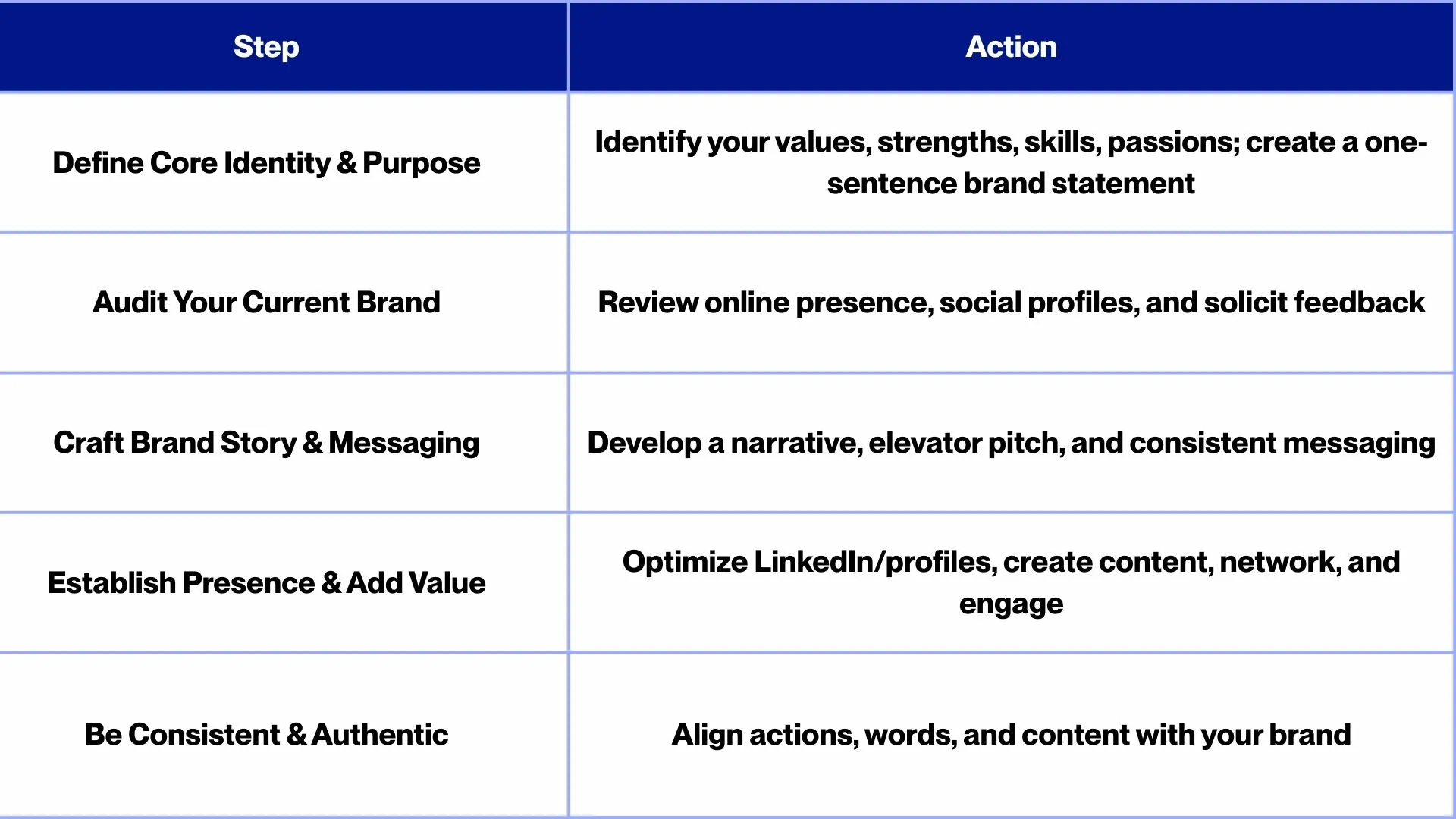
Define Your Core Identity and Purpose
The first step is introspective. Clearly identify your values, strengths, skills, and passions. Ask yourself what you are truly good at, what you care about, and what problems you love solving. The answers to these questions form the foundation of your personal brand. Write down a one-sentence personal brand statement that captures who you are and the value you provide. For example, you might define yourself as a data-driven marketer who helps small businesses grow through innovative social media strategies. Having this clarity will guide all your efforts. Remember, your personal brand should be rooted in authenticity and must reflect your real character and goals.
Audit Your Current Personal Brand
Before you start actively branding yourself, it is important to know where you stand. Take stock of your current reputation and presence. Google your name and see what comes up to determine if it aligns with how you want to be seen. Look at your social media profiles, your LinkedIn, and any personal website or portfolio you have. This is what others see as your brand right now. You might even solicit feedback from trusted colleagues or friends to see what words they would use to describe you. The goal here is to identify gaps between the personal brand you have and the one you want.
Craft Your Personal Brand Story and Messaging
People remember stories and consistent messages. Based on the identity you defined, develop a narrative that communicates your brand. This could include a brief elevator pitch about who you are and what you do, as well as stories that highlight your values and expertise. Think about key experiences that shaped you or accomplishments that exemplify your strengths. Incorporate these into your bio, your resume, your LinkedIn section, and your daily conversations. Clarity and consistency in messaging will make it easier for others to understand exactly what you are about and remember you for it.
Establish Your Presence and Add Value
With your message in hand, it is time to put yourself out there. In today’s world, that largely means an online presence as well as real-world networking. Start by optimizing your LinkedIn and other relevant profiles to reflect your personal brand. Next, consider creating content that showcases your expertise. This could be blogging, making short informational videos, podcasting, or simply sharing insightful posts on social media. Sharing valuable content demonstrates your knowledge and helps others, which builds your credibility. Additionally, engage with your community by joining professional groups and contributing to discussions. The key is to be strategic about where you invest your time by focusing on platforms where your target audience or industry peers spend time.
Be Consistent and Authentic
Ensure that your actions, words, and online content all align with the personal brand you have defined for yourself. Consistency is key because it builds trust. If you have decided your brand is about being a helpful educator in your field, you should consistently share useful knowledge and maintain a helpful tone. At the same time, authenticity must underpin everything. People can quickly sense when someone is trying to be something they are not. It is better to gradually build a solid, authentic brand than to create a flashy but fake persona that you cannot maintain.
Monitor, Reevaluate, and Adapt
Building your personal brand is an ongoing journey rather than a one-time project. Schedule time periodically to assess your branding efforts to see what is working and what feedback you are getting. Adjust your strategy as needed. As you grow in your career, your personal brand will naturally evolve. Ensure you consciously evolve it rather than drifting. In practice, that might mean updating your profiles with new achievements or refocusing your brand message if your career takes a new direction.
By following these steps, you will gradually build a strong personal brand that stands out. Remember that effective personal branding is about demonstrating your value and values in a way that others naturally take notice. When done right, your personal brand will start to speak for you and open doors to new opportunities.
Conclusion
In summary, personal brand vs. personal branding is not about choosing one over the other. You need to understand and develop both. Your personal brand is the essence of who you are professionally, including your reputation and the image others have of you. Personal branding is the toolkit and process you use to shape and communicate that essence to the world. A clear personal brand, coupled with consistent personal branding efforts, can significantly elevate your career or business. It helps you stand out from the crowd, build trust with your audience, and ensures you remain relevant and influential in your field.
The importance of personal branding today cannot be overstated. In an age where anyone can look you up online in seconds, taking control of your narrative is a smart strategy. Do not leave your personal brand to chance. Define what you want to be known for and make a plan to project that image. Whether you are an entrepreneur trying to attract clients, a professional aiming for your next promotion, or a student entering the job market, proactively managing your personal brand can give you a competitive advantage.
Finally, remember that authenticity is the bedrock of a great personal brand. Personal branding is not about creating a false image; it is about showcasing your best, real self in a strategic way. When you align who you are with what you do and broadcast that consistently, you attract the right opportunities and people who value what you offer. Embrace both your personal brand and the practice of personal branding. Invest in them, refine them, and watch as doors open and your professional reputation soars. Your personal brand, managed through effective personal branding, is one of the most powerful assets you have in building the career and life you want. Contact OhhMyBrand today to learn more about how to transform your name into a brand that opens doors. Let’s work together to make you not only visible but unforgettable in your field.



.svg)
.svg)
.svg)
.svg)



.svg)