


Personal Branding For Politicians
Why Personal Branding for Politicians Is Important? How To Build A Powerful Political Brand?
In today’s media-saturated political arena, image isn’t an afterthought. It is center stage. Consider a scenario often seen in modern elections: two candidates share a debate platform, one armed with reams of policy details and the other radiating charisma and storytelling. The latter ends up trending on social media and winning over hearts, even if the former had more facts on their side. The difference maker isn’t just policy. It is personal branding.
At OhhMyBrand, we’ve seen time and again that a politician’s personal brand can make or break their connection with voters. This truth holds globally, from local council races to presidential campaigns, and it’s only growing more pronounced in the digital age.
Personal branding for politicians is not a new phenomenon, but it has evolved into a sophisticated science. Historically, political branding meant catchy slogans on buttons and posters. Today, it involves crafting a public persona with the precision of a Fortune 500 brand campaign. Politicians worldwide are applying commercial branding strategies to politics to stand out in voters’ minds. In essence, political branding is the application of traditional branding frameworks in the political domain, with the goal of differentiating oneself from competitors and being identifiable to citizens.
From Winston Churchill’s bulldog tenacity to Mahatma Gandhi’s image of principled non-violence, leaders across eras have cultivated personal brands that embodied their values. What’s changed is that in the era of Facebook, TikTok, and 24/7 news, personal branding has become a deliberate, continuous strategy rather than a happy accident of history. In this article, we at OhhMyBrand will explore what personal branding means for politicians, why it’s so important, real-world examples of political branding, and strategies for leaders to build their own powerful personal brand.
What Is Personal Branding in Politics?
Personal branding in politics refers to the intentional crafting of a public identity that conveys a politician’s values, personality, and promise. It is how a politician markets themselves as a brand to the electorate, much like a company markets a product. A useful definition from researchers is that a personal brand is essentially the combination of expectations and perceptions that the public holds about an individual. In other words, it’s how others see you. It is the mental image and feelings that spring to mind when voters hear a politician’s name.
Political strategists often describe political branding as adapting corporate branding to the political realm. Just as Coca-Cola or Nike carefully manage their brand image, politicians now employ data-driven marketing, storytelling, and visual identity to shape public perception. Personal branding for politicians involves everything from the messages they champion and the tone of their speeches to their style of dress and social media presence. It’s a holistic image. Personal branding in politics is the intentional creation of a public persona that conveys a candidate’s values, character, and competencies. This means a politician’s brand isn’t just their policy positions. It’s also whether they come across as trustworthy, relatable, strong, compassionate, or visionary.
Importantly, personal branding is about authenticity and consistency. It’s not about creating a fake persona, but highlighting the genuine traits and story that make the politician unique. A successful personal brand aligns the candidate’s true character with the image presented to voters. When done right, this branding creates an emotional connection.
Voters recognize the politician not just by name, but by the feelings and ideas that name evokes. In politics, the manner in which voters recognize the candidate is at the core of personal branding. Ultimately, a political brand answers the voter’s question: Who is this person, what do they stand for, and why should I trust them?
Why Personal Branding Matters for Politicians
Why is personal branding so important to politicians? The short answer is that a strong personal brand is now indispensable for political success. Here are several key reasons personal branding is crucial in the political arena.
Differentiation and Positioning
In any election, candidates are essentially competing brands. Personal branding allows a politician to position themselves uniquely and stand out from other candidates, even if policies are similar. It creates a clear identity in voters’ minds. In a crowded field, a well-defined brand ensures your name carries a distinct meaning that voters can latch onto.
Emotional Connection with Voters
Facts and policies appeal to the mind, but emotions win hearts. Personal branding is what enables a candidate to form an emotional bond with the electorate. By sharing a story, values, and vision in a relatable way, a politician becomes more than a title. They become someone voters feel they know and trust. Voters are more likely to support someone who inspires them or makes them feel heard, and a personal brand built on authenticity and shared values achieves that.
Trust and Credibility
OhhMyBrand consistently emphasizes authenticity in personal branding for good reason. Voters gravitate toward candidates they perceive as genuine. A carefully cultivated brand that aligns words and actions builds trust over time.
For example, Barack Obama’s 2008 campaign succeeded in large part because his personal story reinforced his message of hope, making him appear sincere and trustworthy. When a candidate’s image and messaging remain truthful and consistent, people feel they know the person and can believe in them. This credibility can even act as a trust anchor in an era of misinformation, helping voters distinguish authentic communication from noise.
Memorability and Clarity
A clear personal brand helps condense a complex political profile into an easy-to-remember identity. Voters might not remember every policy detail, but they will remember the impression a candidate makes. Strong branding often boils down to a simple, resonant concept, such as being the reformer or the unity candidate. Voters should be able to describe a candidate in just three words thanks to a bright, clear brand identity. Having this clarity not only makes a candidate more memorable, but also communicates what makes them unique at a glance.
Building Loyalty and Engagement
A great personal brand does more than draw votes. It builds a movement. When people feel personally connected to a leader, they become loyal supporters who volunteer, donate, and advocate to others. Loyalty is what turns awareness into action. For example, a charismatic personal brand can translate into enthusiastic rallies, higher social media engagement, and fundraising success. Emotional investment leads to monetary investment in campaigns. Personal branding gives politicians that factor that galvanizes a base of supporters.
Control of Narrative
In politics, if you don’t define yourself, your opponents or the media will do it for you. Proactively shaping a personal brand means owning your story before others distort it. A campaign that invests in building a clear personal brand essentially owns its own story, leaving less room for opponents to define the candidate negatively. Conversely, without a defined brand, a politician is vulnerable to labels and attacks that stick. For instance, branding experts observed that Hillary Clinton in 2016 struggled to shed an image of being out of touch, and attempts to rebrand late in the race felt forced. The lesson is that having no clear personal brand can seriously undermine even a well-qualified candidate.
Strategic Advantage in Campaigning
Personal branding is a strategic necessity in modern campaigning. Every aspect of a campaign, including speeches, ads, social media, and debates, should sync up to reinforce the candidate’s brand identity. A personal brand is a system that synchronizes tone, images, and message into a single identity. When done well, all campaign elements work in harmony to amplify the core persona, making the candidate’s appeal more powerful and coherent. This strategic cohesion can be the deciding factor in winning hearts and votes. Policies might sway logic, but a strong brand sways emotion.
Examples of Political Branding in Action
Nothing illustrates the power of personal branding better than real-world political examples. Let’s look at how some prominent politicians across the globe have crafted effective personal brands and what happens when they do not.
Barack Obama: The Architect of Hope
One textbook example of personal branding is Barack Obama’s 2008 presidential campaign, built around the uplifting slogan "Hope and Change." Obama’s team turned those words into a unifying theme that matched his optimistic persona. His youthful energy, inspirational oratory, and personal story as a biracial American with humble beginnings all reinforced the brand of a fresh, hopeful leader.
The famous "HOPE" poster became an emblem recognized worldwide, encapsulating his brand in a single word. Because Obama consistently embodied optimism and a vision of change across all platforms, from speeches to social media, voters formed an emotional connection to him. This cohesive personal brand helped propel him to win two terms and inspired a new generation of voters. It demonstrates how aligning a story and message can cement a legacy as a transformational leader.
Hillary Clinton: The Struggle for Connection
In contrast, Hillary Clinton’s 2016 campaign is often cited as a cautionary tale in branding. Despite her experience, Clinton struggled to connect emotionally with broad voter segments, and her brand identity remained muddled. She was frequently perceived as elite or detached, partly because she could not shake the narratives opponents cast on her.
Efforts to soften or repackage her image late in the race appeared inauthentic to many. Clinton’s focus on competence and experience, without a relatable personal narrative, was overshadowed by an opponent with a clearer, emotionally resonant brand.
Donald Trump: The Anti-Establishment Outsider
Donald Trump’s personal brand was deliberately forged as that of the anti-establishment businessman turned politician. His slogan "Make America Great Again," emblazoned on countless red hats, was more than a policy stance. It was a visceral identity that voters could rally around.
Trump cultivated an image of blunt authenticity and outsider credibility, often through unfiltered communication and a distinctive style. Whether people loved him or loathed him, his brand was unmistakably clear. He was the candidate who tells it like it is and fights for forgotten Americans. This populist persona resonated deeply with a segment of voters who felt left behind by traditional politics. Even amidst controversies, his base remained loyal because his personal brand as a rebellious and bold fighter never wavered.
Global Perspectives: Modi and Ardern
In India, Prime Minister Narendra Modi has built Brand Modi, a powerful personal brand instrumental in his electoral victories. Modi is marketed as a charismatic, development focused leader with a relatable origin story as a tea seller’s son and a tech savvy, decisive image. This persona led to a Modi wave in 2014, when his brand’s popularity helped his party achieve a historic landslide. He is arguably the most recognizable and popular Indian politician in decades, showing how a strong personal brand can dominate a nation’s landscape.
In New Zealand, former Prime Minister Jacinda Ardern cultivated a personal brand centered on empathy and compassion. By demonstrating genuine kindness and calm leadership in response to crises, she became known globally as a new kind of leader. This empathetic branding earned her significant international praise and made her a global leadership icon. Voters felt they knew her values, illustrating that authenticity can be a leader’s greatest asset.
Historical Precedents
Even historically, personal branding has played a role. Winston Churchill was very aware of his image. His speeches, bulldog tenacity, and signature cigar all reinforced the brand of a defiant, courageous wartime leader. Across the globe, Mahatma Gandhi’s simple attire, ascetic lifestyle, and consistent message of non-violence established him as the embodiment of peaceful resistance. These examples show that while the term personal branding may be modern, the practice of shaping an image to influence the public is age old.
The successes and failures in these examples underline a clear lesson: political branding works. Effective personal brands can transcend policy. They become a shorthand for what a leader represents. Voters might forget specific platform details, but they remember that Obama equals Hope, Trump equals MAGA, and Ardern equals Empathy. That is the lasting power of a personal brand in politics.
How to Build a Strong Personal Brand in Politics?
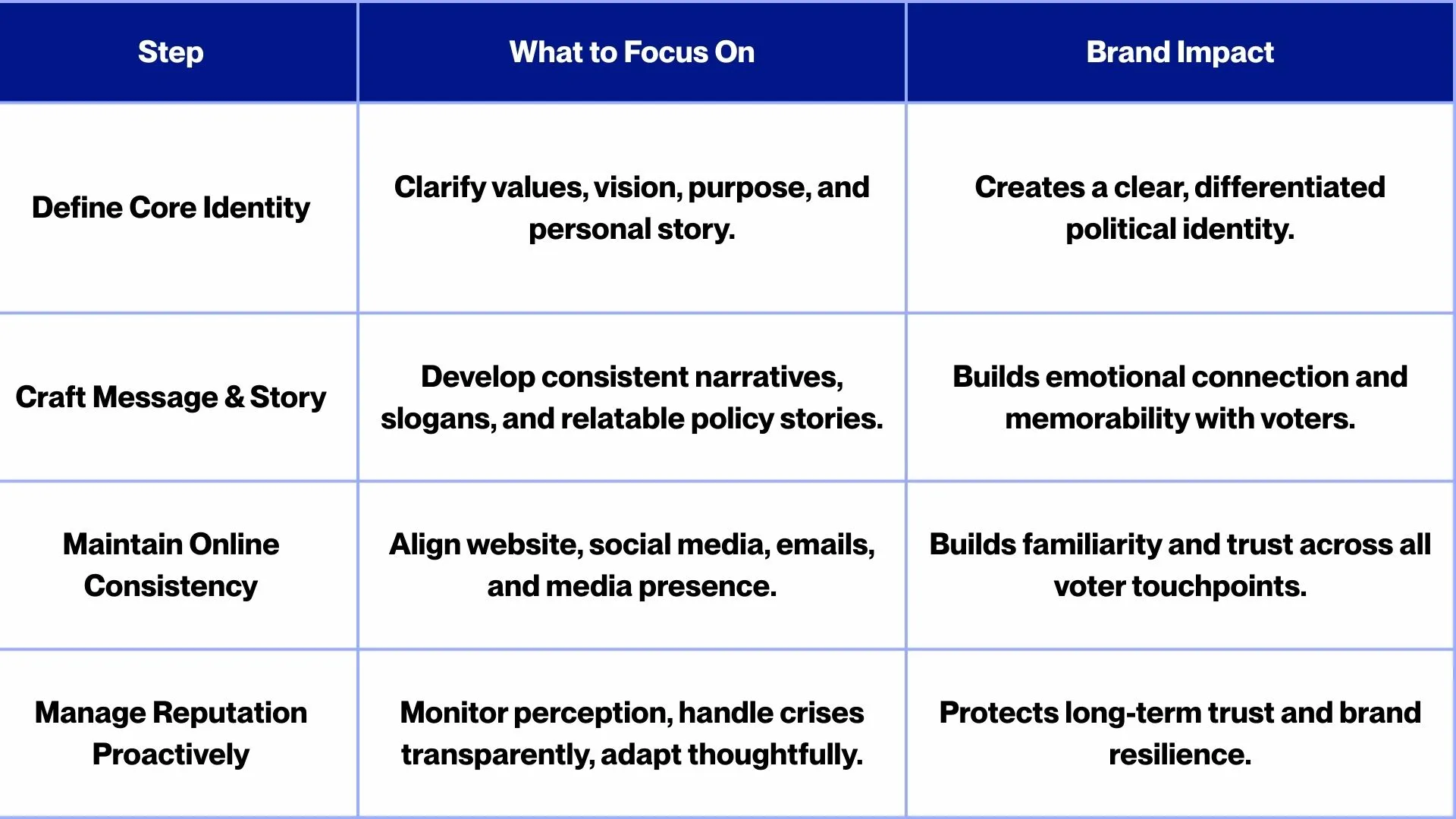
Personal branding might sound abstract, but it can be approached systematically. Whether you are an up-and-coming politician or a seasoned elected official, you can take concrete steps to develop and strengthen your image. At OhhMyBrand, we guide political clients through a strategic process similar to corporate branding. Here is a step by step strategy to build a compelling political brand.
Discover and Define Your Core Identity
Start with introspection and research. Identify the core values, beliefs, and attributes that define you and that you want the public to associate with you. Ask yourself what you stand for, what your vision is for your community, and what personal story shapes your passion for service. This step may involve surveying public perceptions to pinpoint what resonates. The goal is to craft a clear personal mission statement that differentiates you. Defining your purpose and authentic narrative upfront lays the foundation for a consistent brand. It can help to write down your brand in three words to guide everything else you do.
Craft Your Message and Story
With your identity defined, develop a compelling narrative and messaging platform that communicates who you are in an engaging way. This includes your campaign slogan, key talking points, and the personal anecdotes you share in speeches. Translate your policy positions into relatable stories that reflect your values and connect with everyday lives. Storytelling humanizes you and makes abstract issues tangible. Ensure that your tone and voice in all communications reflect your persona. Whether you are folksy and approachable or bold and fiery, your messaging should highlight your unique selling points. Consistency is key so that over time the public hears a single, reinforcing story about you.
Develop a Visual Identity
Humans are visual creatures, and in politics, imagery sticks. A critical part of personal branding is creating a visual identity that is professional and recognizable. This includes a color scheme, a campaign symbol, and even your personal style of dress. Consider how you appear in photos, videos, and at events. These visuals should consistently project your intended image. Many successful politicians use visual cues effectively, such as signature logos or specific fonts. Pay attention to personal appearance as well. Choosing to roll up your sleeves to seem approachable or wearing local traditional attire to emphasize cultural roots can reinforce your narrative. The objective is to ensure that someone can identify your materials at a glance and feel the intended impression.
Establish a Consistent Online Presence
In the modern era, a digital footprint is often the primary way voters interact with a brand. Your website, social media profiles, email newsletters, and podcast appearances should all reflect the same persona and message. Use the same profile photo or colors for recognizability. It is vital that whether a voter sees you on a debate stage or an Instagram Live, you feel like the same person. Inconsistent messaging across platforms can confuse supporters and erode trust. We stress fidelity to the brand across all channels. If you champion transparency, carry that tone into your social media by sharing behind the scenes glimpses. This consistent presence builds familiarity and extends your reach to younger voters.
Engage and Connect Authentically
A personal brand is not built by broadcasting alone. It is also forged through interaction. Go out and engage with the public in ways that reinforce your brand values. If your brand is for the people, make sure you are frequently seen at community events listening more than speaking. Authentic engagement often involves unscripted moments that show voters the real you. These moments often leave the strongest imprint. Always be genuine because voters can sense political theater easily. When people experience you as approachable and real, it dramatically strengthens your credibility. This step is about backing up your image with substance.
Manage Your Reputation Proactively
Even a well established brand needs maintenance. Politics is high pressure and unpredictable, and how you handle challenges will either reinforce or undermine your brand. Have a strategy for reputation management and crisis communication. Monitor what is being said about you in the media and on social platforms so you can address rumors swiftly. If a mistake happens, respond in a way consistent with your brand values. Being vigilant in guarding your image ensures that one off-message incident does not undo long term branding efforts. Gather feedback from advisors or public polls about how your image is perceived and adjust if necessary without appearing fickle.
By following these steps, politicians can build a strong personal brand systematically. It is about defining who you are, conveying it clearly, and living it consistently. This strategic approach transforms personal branding from a buzzword into a daily practice. Building a brand is not a one-time task but an ongoing effort. The most successful politicians treat their personal brand as a living asset they cultivate throughout their entire career. Simply shaking hands is not enough if those efforts do not reinforce a clear identity. Every public appearance should sing in harmony from the same songbook to build a political brand that endures.
Personal Branding in Leadership and Beyond Politics
While this discussion is focused on politicians, personal branding is equally important for leaders in other fields. This includes everyone from business CEOs to community leaders. The fundamental principles remain the same. A strong personal brand can elevate an individual’s ability to lead, influence, and inspire trust in any context.
For instance, corporate leaders leverage personal branding to shape public perception of their companies and to attract talent. When a CEO is seen as trustworthy and visionary, it rubs off on the company brand. This makes customers and investors more confident in the organization. The rise of figures whose personal images are tightly interwoven with their companies underscores how powerful this can be.
For leaders in politics, business, or nonprofits, the personal brand becomes an extension of the organization’s values and credibility. Leadership experts note that consumers and stakeholders today care about who they are dealing with, not just what the product is. In a similar vein, citizens care about the character of a politician, not just their party label. That’s why we advise not only politicians but also executives and public figures on personal branding strategies. It is about establishing oneself as an authority with integrity, thereby lending credibility to a cause or company. Moreover, a well-crafted personal brand can help any leader navigate crises. People are often more forgiving toward a brand they believe is honest.
It comes down to a universal leadership truth: people follow people. Titles and organizations matter, but the person behind them matters more. Whether you are leading a nation or a startup, personal branding in leadership is about aligning purpose and values with a public persona. This naturally attracts followers, supporters, customers, or collaborators who believe in you. Politicians operate on a very visible stage, making personal branding critical, but the same concept can turbocharge careers in any domain.
Conclusion
In the gladiatorial arena of politics, you are your brand. Personal branding for politicians is not simply about self-promotion. It is about shaping the narrative of leadership. It is the art and science of defining what you stand for in the public eye so that trust and connection form the bedrock of your relationship with voters. A compelling personal brand differentiates a politician in a crowded field, creates an emotional bond with citizens, and can be the deciding factor between victory and defeat. We see proof that branding wins hearts before policies win minds.
For current and aspiring political leaders, the takeaway is clear. Invest in your personal brand as much as you invest in policy expertise or campaign logistics. This means knowing yourself, being intentional in how you project yourself, and staying true to your word. It means treating every speech, social media post, and handshake as an opportunity to reinforce the story you want people to remember. It is hard work that requires consistency, creativity, and credibility, but the payoff is a durable public trust. In an age where public sentiment can shift with a single viral video, a strong personal brand is a stabilizing force and a reservoir of goodwill.
At OhhMyBrand, we firmly believe that every politician has a personal brand. The question is whether you shape it or leave it to chance. The most successful figures are those who embrace this practice early and continually. They understand that being a leader is not just about the issues you champion, but also about the image you cultivate and the trust you earn. If you are a politician or advising one, ask yourself what your brand is and if it is what you want it to be.
Remember, personal branding in politics is a journey, not a destination. Start articulating your unique story and strengths now and live by them every day. The result will be a magnetic personal brand that amplifies your message and influence. In a world of skeptical publics and fierce competition, your personal brand can become your greatest political asset and your leadership identity etched in the minds and hearts of the people. Contact OhhMyBrand today to learn more about how to transform your name into a brand that opens doors. Let’s work together to make you not only visible but unforgettable in your field.


.svg)
.svg)
.svg)
.svg)



.svg)